

Communication at the Heart of Encounter: How Women in Media Can Inspire Hope
“No foul language should come out of your mouths, but only such as is good for needed edification, that it may impart grace to those who hear” (Ephesians 4:29).
“I Thirst”: Using Our Gifts to Quench Christ’s Thirst
In a message by Pope St. John Paul II for Lent 1993, the great pope called the Church to reflect on Jesus’ words, “I thirst” (John 19:28) and “Give me a drink” (John 4:7). In these words, he wrote, ‘we hear a cry from the poor, especially those who did not have access to clean water’. In a subsequent letter to the Missionaries of Charity, St. Teresa of Calcutta (then simply known as Mother Teresa) elaborated on this message:
“‘I thirst’ is something much deeper than Jesus just saying ‘I love you.’ Until you know deep inside that Jesus thirsts for you — you can’t begin to know who He wants to be [for] you. Or who He wants you to be for Him.”
This Lent, Catholic Women in Business invites you to reflect with us on how Jesus thirsts for each one of us and how we can quench His thirst — through prayer, through sacrifice, through loving His children who are most in need (and there are so many this Lent in particular!). In our content this season, we’ll be exploring how, as Catholic professionals, we can begin to understand “who He wants to be” for us, “who He wants [us] to be for Him,” and how we can share His great love for us all with everyone we encounter.
I’ve gotten used to people rolling their eyes when I tell them I work in media — specifically when I say I work in journalism. Most pivot the conversation to another topic. Others ask me if I believe the news is fake and manipulative. Other communication professionals, whether in marketing or public relations, fall subject to the same critique.
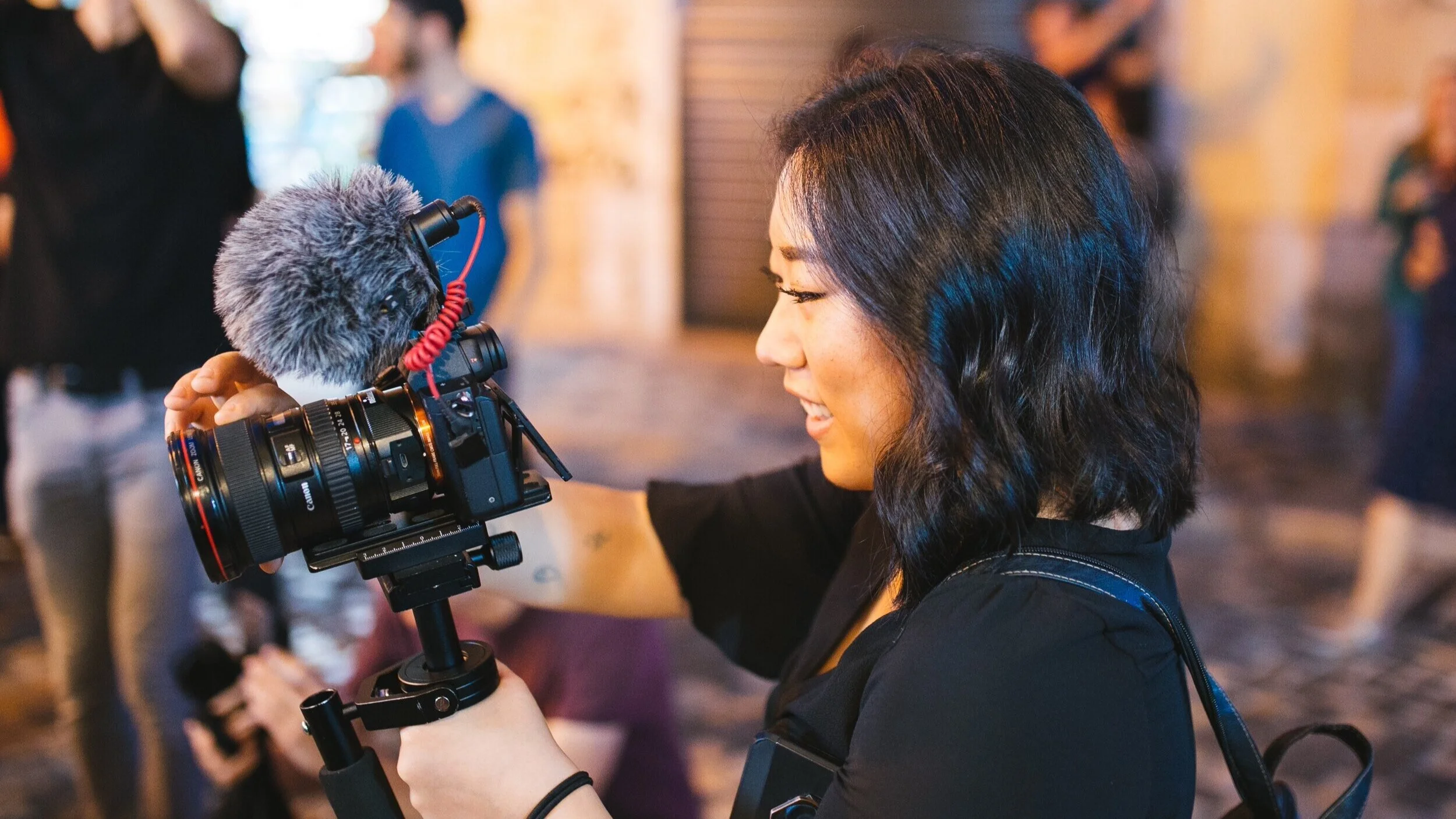
Women in the media and business communications industries can make these critiques fall flat. We can use our gifts and talents to uphold truth, dignify people in the digital space, and incorporate the Gospel, even when dealing with difficult messages.
Creating Unity and Dignity
Pope Francis has discussed this topic over the last few years in his addresses on World Communication Day. The Pope welcomes the technological advances that enable us to interact with more ease and frequency than ever before, highlighting how they can create “a sense of unity of the human family” that can “inspire serious efforts to ensure a more dignified life for all.”
Pope Francis says that individuals should respond to one another in a way that sees the other as a family member or neighbor. We can approach virtual communication, he says, through the lens of the Good Samaritan who helped and supported the stranger on the side of the road. This message is part of the Pope’s goal in connecting Catholics to be a part of what he calls “the culture of encounter.” Broken down, he explains that faith is an encounter with Jesus; therefore, we must do as Jesus does and encounter others.
For communication professionals, this call is broader: He challenges us to not only participate in a culture of encounter but help create it:
“The world of media also has to be concerned with humanity, it too is called to show tenderness. The digital world can be an environment rich in humanity; a network not of wires but of people. The impartiality of media is merely an appearance; only those who go out of themselves in their communication can become a true point of reference for others. Personal engagement is the basis of the trustworthiness of a communicator. Christian witness, thanks to the internet, can thereby reach the peripheries of human existence.”
Quenching People’s Thirst Through Encounter
People are thirsting for truth, hope, and goodness — thirsting for God. And communications professionals, working with the internet’s connectivity and power, have a digital highway to communicate this message.
This communication looks different for everyone. You may not be explicitly working for a Christian entity and using your gifts to sell Catholic content or promote the latest encyclical, but you, too, can share the Good News. The power communication professionals have in shaping public opinion is great. The way an item is sold, the news is explained, a person is photographed … they all influence our understanding of the world.
We can participate in constructive forms of communication that reject prejudice, tell multiple sides of a story, ensure transparency, and refuse to turn tragedy and suffering into human entertainment. While every job may not have a social justice bent, we can work to ensure that our messaging values the human person and puts truth at the forefront of our language.
In my own work, this looks like questioning editors when they want to interview a person for a tokenized identity, ensuring I don’t fall into harmful stereotypes when I am doing photo research, and double-checking fact checkers’ claims to ensure all sides of a story are being aggregated and bias is not seeping into a story.
It will look different for each industry and each person, but we are all called to use our communications strategies to elevate God and the human person.
Tips and Tools
Here are a few tips and corresponding resources that can help:
Review your industry’s code of ethics, or develop your own, to ensure your work maintains integrity.
Reflect on your language to ensure that you speak about people with dignity. For example, use person-centered language (i.e., “person experiencing poverty” rather than “poor person”).
Investigate the value the Church places on communication and your role in communicating hope, mercy, goodness, and truth in the yearly World Day of Communication Papal address.
Pray for the intercession of media-minded Catholics, like Bishop Fulton Sheen, Mother Angelica, St. John Paul II, and St. Francis de Sales.
Every day, but especially in this Lenten season, communication professionals can humanize the digital sphere; acknowledge their audiences and subjects as “neighbors”; and imbue the media with the transcendentals of truth, beauty and goodness.
Marissa Vonesh works as the lead graphic designer for Moment magazine in Washington, D.C. A native to Northern Arizona and adventure junkie, she is no stranger to hiking, spontaneous road trips, and midnight adoration sessions. Visit her work at marissavonesh.com, or connect with her on Instagram.