

“Let your ‘Yes’ mean ‘Yes,’ and your ‘No’ mean ‘No’” (Matthew 5:37).
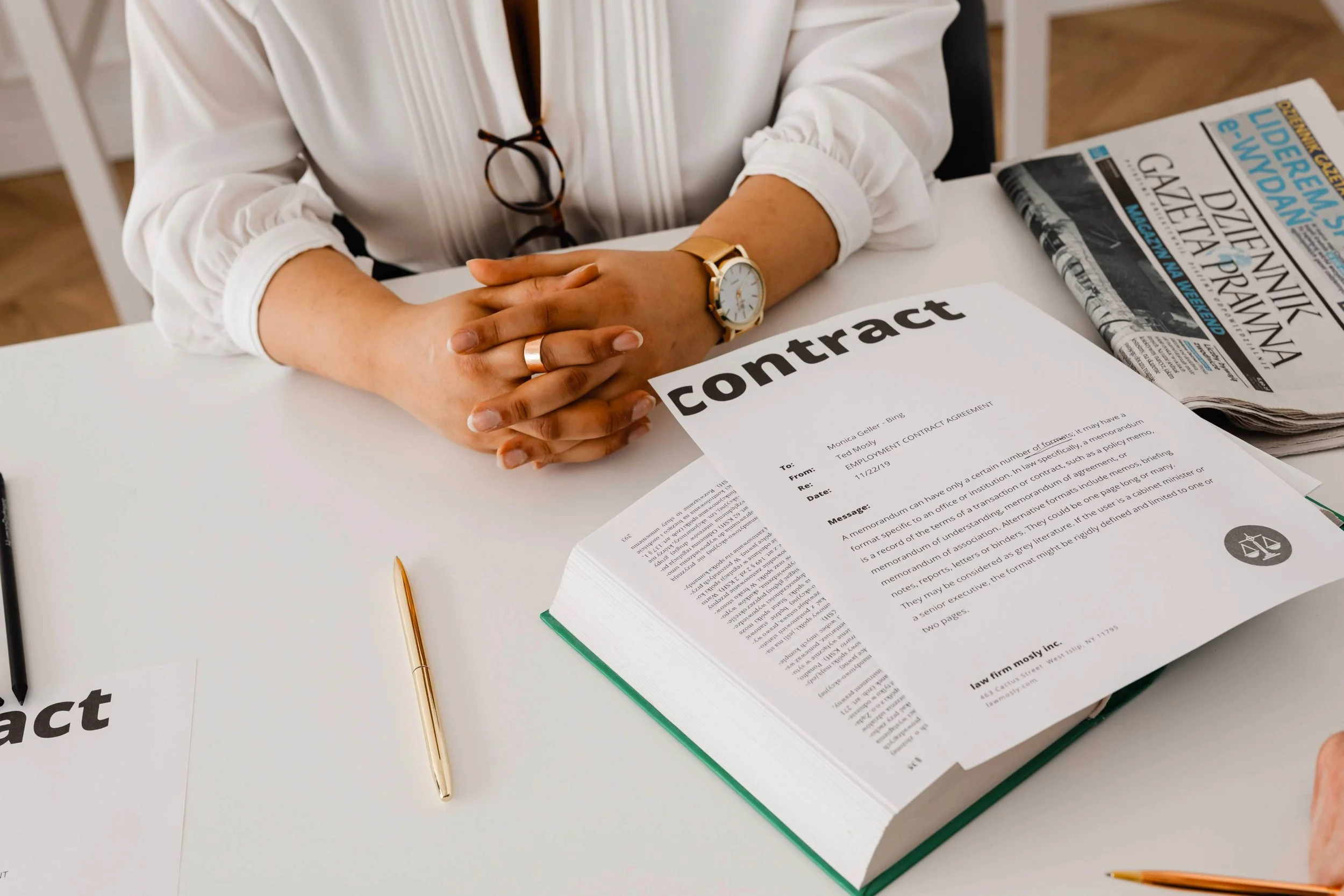
Whether you run a business, freelance on the side, or work for someone else, chances are you will encounter contracts. You might sign an agreement with a client, a vendor, an employer, a landlord, or a business partner.
And if you are like many people, your first instinct might be to skim the document, scroll to the signature line and think, “this is probably fine.”
However, a contract is not just paperwork, but a way of clearly communicating what two or more people have agreed to do for one another. Understanding the basics can help you protect your business, avoid unnecessary misunderstandings, and –perhaps most importantly – keep your word.
What Makes a Contract Binding?
At its most basic level, a contract is an agreement that the law recognizes as enforceable. The precise requirements vary depending on the type of agreement and the law that applies, but generally, contracts involve:
Parties: Who is making the agreement?
Mutual agreement: What has each party agreed to do?
Consideration: What is each party giving or receiving in exchange?
Legal purpose: Is the agreement for something lawful?
Capacity: Do the parties have the legal ability to enter the agreement?
Some contracts must also meet additional requirements. For example, certain types of agreements must be in writing to be enforceable.
Do We Really Need a Contract?
Sometimes, an agreement made verbally can be legally enforceable. The problem is proving exactly what was agreed upon.
Imagine a freelance web designer who agrees over coffee to build a client's website for $2,000. They know and trust each other, so they skip the written contract. A few weeks later, the client asks for several additional pages and social media graphics. The designer considers those services outside the original agreement, while the client remembers them as part of the deal.
Neither party necessarily acted in bad faith. They simply remembered the conversation differently. A written agreement could have prevented the misunderstanding. It gives both parties a shared reference point for what they agreed to, what each person is responsible for, and what happens if circumstances change.
What You Should Look for Before Signing a Contract
Before signing, make sure you understand at least these basic provisions:
1. The Parties
Are the correct people or businesses named? If you are operating through an LLC or corporation, make sure the agreement identifies the appropriate legal entity.
2. Payment Terms
How much will you be paid or how much do you owe? When is payment due? Are there deposits, late fees, expenses or additional charges?
Do not assume that because you discussed payment verbally the contract reflects that conversation. The written agreement should match your actual understanding.
3. Deadlines and Responsibilities
A good contract should make the parties' responsibilities clear. If your client must provide materials before you can begin a project, for example, that may be worth addressing.
4. Termination
What happens if either party wants to end the relationship?
Look for provisions explaining when and how the contract can be terminated and what happens afterward. This can be particularly important for ongoing services and subscriptions.
5. Liability
What happens if something goes wrong?
Contracts sometimes contain provisions that limit liability, require one party to indemnify another or address responsibility for particular losses. These provisions can have significant consequences, so do not skip them simply because they are written in legal language.
If you do not understand an important provision, ask questions or seek legal advice before signing.
Prudence Is Not Distrust
As Catholics, we are called to practice prudence, one of the cardinal virtues. The Catechism of the Catholic Church (1806) describes it as the virtue that helps us “discern our true good . . . and choose the right means for achieving it.” That, of course, includes making reasonable decisions about our businesses and professional responsibilities.
Scripture reminds us of the importance of keeping our word: “Let your ‘Yes’ mean ‘Yes,’ and your ‘No’ mean ‘No.’” (Matthew 5:37). A contract helps turn that principle into something practical. It puts the parties' “yes” on paper so everyone knows what that yes means.
Contracts are not needed because we expect the worst from people. Instead, they make expectations clear and honor commitments.
Of course, some contracts are complicated enough to require an attorney's help. If you are being asked to sign an agreement involving significant money, substantial liability, intellectual property, employment restrictions, or other serious obligations, get legal advice before signing. Simple agreements deserve careful attention as well. Read through each part carefully and ask questions out of prudence. After all, excellence in business involves getting the job done, but also doing it in a way that reflects the virtues we are called to practice.
Alyssa Grasinski is a legal writer, editor, wife, and mother who is passionate about helping businesses communicate clearly. She earned her Juris Doctor in 2019 and now works with law firms and business owners through her writing business, Claritas Vox, providing blog writing, website copy, ghostwriting, and editing services. Alyssa and her husband, Michael, have five children on earth and one in heaven. She can be reached at alyssagrasinski@gmail.com or https://www.claritasvox.com/