

“Oh, what happiness would be ours if all men, individuals, families, and nations, would but let themselves be governed by Christ!” (Pope Pius XI, Quas Primas, December 11, 1925)
In 1925, the roaring twenties were in full swing in the United States. Inhibitions were low and economic prosperity and urbanization high. In Italy, fascist leader Benito Mussolini officially dissolved the parliament and declared himself dictator. Meanwhile, in a German prison, Adolf Hitler published the first volume of his political manifesto. That same year, the Soviet Union founded the League of Militant Atheists, amping up its anti-religion campaign by closing churches and persecuting the clergy. It was a tumultuous time in history, both politically and spiritually.
Fueled by a desire for Christ to reign in the hearts of all, and a determination to push back the tide of anti-religious laws in her country, a fierce Frenchwoman, Marthe de Noaillat, boldly petitioned to several popes for the feast of Christ the King to be instituted by the universal Church.
After many initial setbacks, her petition was accepted by Pope Pius XI, and the solemnity officially established in his encyclical Quas Primas on December 11, 1925.
Who Was Marthe de Noaillat?
Marthe de Noaillat was born in Le Crotoy, France, and was the seventh of 12 children to devout Catholic parents. She loved the poor and strongly desired to enter religious life. However, after seven years in and out of a cloistered religious community, her superiors decided that due to her poor health, it was not in her best interest to remain. At the age of 31, she returned to secular life with her family and later married. After her death, her husband wrote what one of her superiors in the convent said of her:
“Marthe is not made to live within four walls; it is in the public squares that she must preach…. She had only one thought: to win souls for Jesus Christ.”
In 1919, Marthe became Director of the Hieron Museum in Paray-le-Monial, France. It was a museum of sacred art visited frequently by pilgrims visiting the city, and the place of her apostolic activity. While there she learned of a petition by an Italian Jesuit priest, Father Jean-Maria Sanna-Solaro in 1899, to establish the feast of Christ the King in the universal church. His petition was ultimately rejected by the Congregation of Rites in the Vatican, because it was not the right time for such a feast day to be instituted.
Undeterred by his rejection, Marthe set about to accomplish what Fr. Sanna-Solaro had attempted to do 20 years prior. However, despite her zeal, she dealt with discouragement on every side. Nevertheless, “she remained firm in her conviction that the…institution of the feast, would be a direct blow struck at that spirit of materialism which insisted so loudly on the rights of man, while ignoring those of God.”
For several years, she worked diligently utilizing her network and those of her colleagues to gather signatures of approval from every bishop in the world, which was a requirement by both Pope Benedict XV and later Pope Pius XI. The popes wanted to ensure that this request was supported by the universal church and was not just a personal campaign by Marthe. She sought support through the press, Catholic magazines, religious orders and communities and ultimately received approval from not only bishops but also from major heads of religious orders, the clergy and influential laymen.
Throughout this process, she was sustained by daily mass and Eucharistic adoration, knowing that she could do nothing by her own strength. Her efforts were rewarded when she and her husband, Georges Noaillat, received an invitation to be guests of honor at the Mass celebrated by Pope Pius XI, establishing the feast of Christ the King on December 31, 1925.
Unfortunately, Marthe died unexpectedly a few months later. It appears her mission was truly to be an apostle of Christ the King. The feast is now celebrated on the last Sunday of the liturgical year (before Advent).
Why a Special Feast Day for Christ the King?
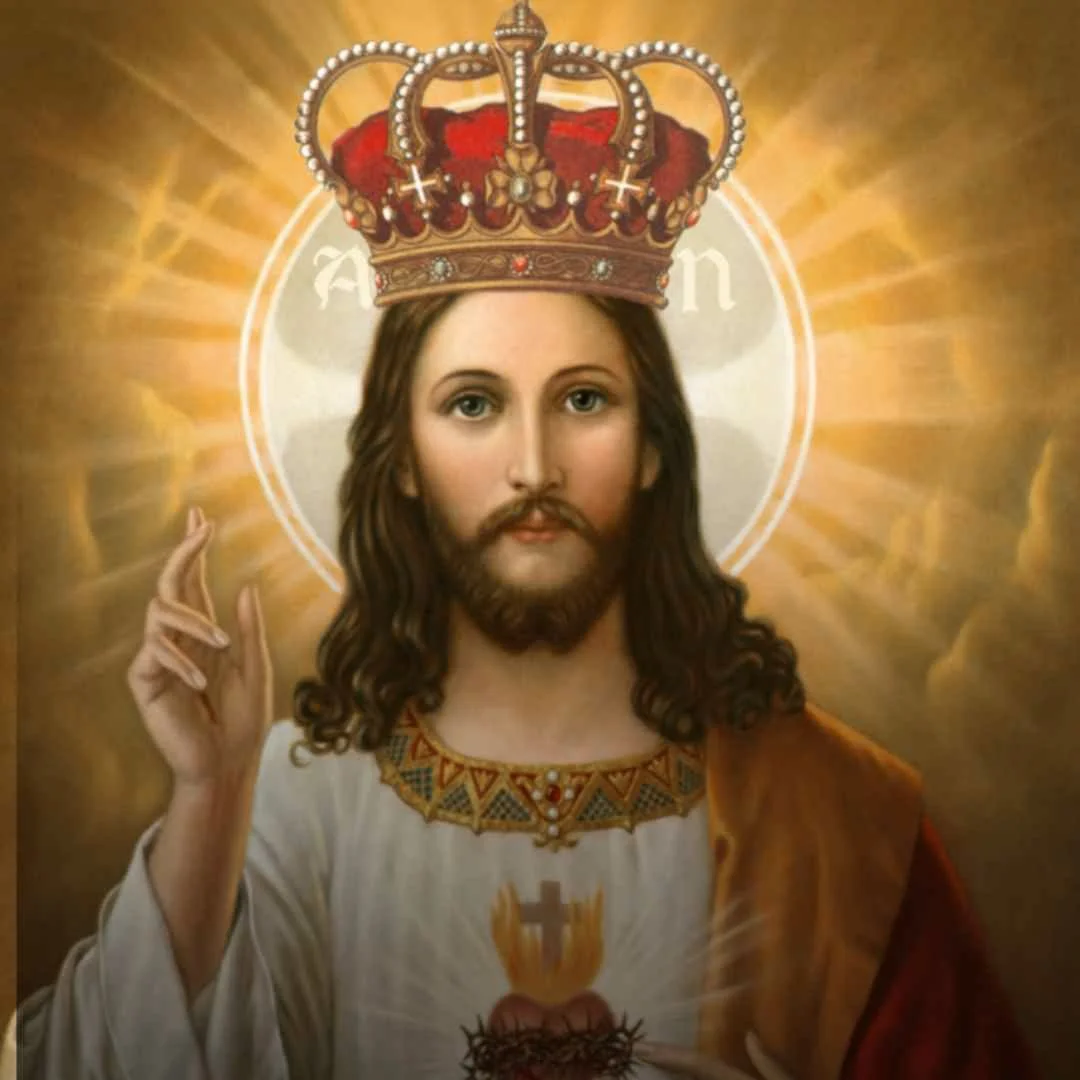
By establishing the Solemnity of Our Lord Jesus Christ, King of the Universe, Pope Pius XI sought to remind the world of Christ’s authority and dominion over every creature, circumstance, and nation. In Quas Primas, he states:
“…the annual and universal celebration of the feast of the Kingship of Christ will draw attention to the evils which anticlericalism has brought upon society in drawing men away from Christ, and will also do much to remedy them. While nations insult the beloved name of our Redeemer by suppressing all mention of it in their conferences and parliaments, we must all the more loudly proclaim his kingly dignity and power, all the more universally affirm his rights” (paragraph 25).
“Nations will be reminded by the annual celebration of this feast that not only private individuals but also rulers and princes are bound to give public honor and obedience to Christ” (paragraph 32).
Through this feast day, the Pope also desired for all people to submit their entire lives to Christ. He wrote (emphasis added):
“If to Christ our Lord is given all power in heaven and on earth; if all men, purchased by his precious blood, are by a new right subjected to his dominion; if this power embraces all men, it must be clear that not one of our faculties is exempt from his empire.
He must reign in our minds, which should assent with perfect submission and firm belief to revealed truths and to the doctrines of Christ. He must reign in our wills, which should obey the laws and precepts of God. He must reign in our hearts, which should spurn natural desires and love God above all things, and cleave to him alone. He must reign in our bodies and in our members, which should serve as instruments for the interior sanctification of our souls, or to use the words of the Apostle Paul, as instruments of justice unto God. If all these truths are presented to the faithful for their consideration, they will prove a powerful incentive to perfection (paragraph 33).
Marthe de Noaillat is an example of a woman who submitted her entire life to Christ. She persisted despite disappointments and discouragement, desiring that all would know Jesus Christ. Like her, we too can surrender all to Christ and be instruments of change in the world He reigns over.
Valentina Imhoff, MBA, is a career coach helping others encounter God through their work. She has lived and worked in six countries and has over 10 years of experience in a variety of industries. In addition to coaching, she facilitates Called & Gifted workshops to help others discern their charisms. Her greatest loves are her husband, son, and trying new recipes in the kitchen. Connect with Valentina at fiatcareercoaching.com, or tune into her podcast on YouTube, Apple Podcasts, or Spotify.