

Nurturing Whole Health: Faith, Clinical Wisdom and Motherhood
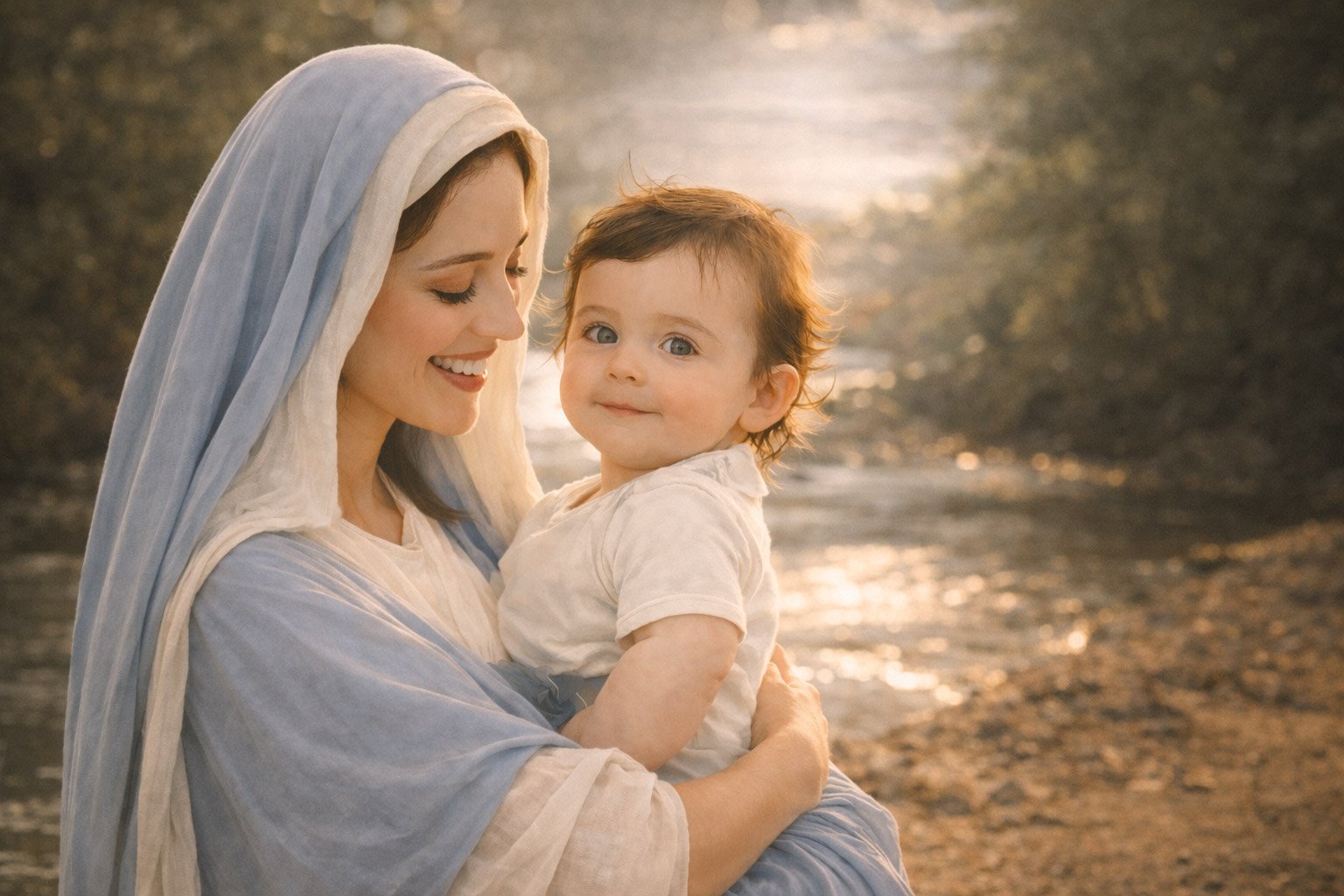
Nicole Lea founded Hello Eema to support mothers in nurturing whole health for themselves and their children. “Eema” means mama or mother in Hebrew. It is an endearing, intimate word for Mom that conveys comfort, familiarity, and love. “Hello” means you are seen. “Hello Eema wants to accompany women on the journey of motherhood,” Nicole said. Hello Eema began when she recognized a gap. There are wonderful resources about pregnancy, babies, and physical health. Additionally, beautiful resources about faith are published. However, she could not find something that truly united the two while also giving mothers trustworthy, practical guidance for caring for their children.
Nicole wanted to help the women who feel utterly overwhelmed 一 even paralyzed 一 by the volume of information, expectation and judgment around all maternal decisions.
After repeatedly feeling called to write the book “Nurturing Whole Health: You, Your Baby and God in the First Year,” her connection with Dr. Kathryn Italia in 2024 could not be dismissed as coincidental. Together they finished the book and published it on the Feast of the Immaculate Conception in 2025.
The book combines evidence-based pediatric information with practical motherhood guidance and Catholic Spiritual encouragement. Nicole and Kathryn are well-qualified both as mothers and health care providers. After working as a Registered Nurse, Nicole became a Certified Pediatric Nurse Practitioner. Kathryn worked as a pediatrician for nearly two decades.
Although the two think alike in many ways, they each bring gifts and perspectives the other does not have. Their complementary gifts made the book better and more whole, they said. Rather than more data - which mothers already have enormous amounts of - they share knowledge shaped by clinical expertise and wisdom formed as healthcare professionals and mothers.
What services and support does Hello Eema offer? How can moms access them?
Nicole: Motherhood is joyful and beautiful. It is also full of questions, exhaustion, vulnerability, and sometimes isolation. I want mothers to understand that caring for themselves is not separate from caring for their children. Hello Eema exists to encourage and empower mothers to nurture whole health — spiritual, mental, emotional, and physical — for themselves and their families.
Healthcare navigation is an important part of this work because modern healthcare can be extraordinarily complicated. Sometimes a woman does not need another medical provider; she needs someone knowledgeable to walk beside her, help her organize what she is hearing, formulate questions, locate appropriate resources, and consider her next steps. Practical, sound guidance grounded in our faith is deeply needed.
My coaching comes from the perspective that health is much more than the absence of illness. Hello Eema coaching does not replace a physician, therapist, priest, or other professional. It is accompaniment — helping a woman see the whole picture and grow in confidence as she cares for herself and her family.
Beyond the book, moms can access Hello Eema through the website and its resources and links, YouTube, in-person speaking and events, and individual coaching. Kathryn and I write educational and reflective content for the website as well.
For those who may not be familiar with the concept of holistic health, can you explain how the four areas you discuss in the book impact each other?
Nicole: I often return to Mark 12:30: “You shall love the Lord your God with all your heart, with all your soul, with all your mind, and with all your strength.” Those words give us a beautiful picture of the whole person. We are not simply bodies that sometimes become sick. We are physical, emotional, mental, and spiritual beings, and each part affects the others.
Think about a mother who has not slept because her baby has been awake all night. Physically, she is exhausted. Mentally, it may be harder to concentrate or make decisions. Emotionally, she may be more irritable, anxious, or overwhelmed. Spiritually, she may find prayer difficult or even wonder where God is in the exhaustion. None of those experiences exists in isolation.
The reverse is also true. Prayer can bring peace that changes the way we respond emotionally. A walk outside can support physical health while clearing the mind and creating space to talk with God. Asking another woman for help can meet a practical need while also reducing isolation. Receiving appropriate medical or mental-health care can make it possible for a woman to be more present to her family and her spiritual life.
Modern healthcare is very good at responding to acute illness, but a human being is deeper than a diagnosis or a moment in time. Whole health asks a broader question: How is this person doing as a whole? Even in illness, a person can experience forms of wellness, connection, meaning, and spiritual health. That is the perspective we want mothers to carry into their own lives and into the way they nurture their children.
There are so many books about childcare and child rearing. Why is yours different and unique?
Kathryn: I believe our physical and mental well-being is connected to our spiritual well-being. When our spiritual foundation is strong, we are better equipped for whatever physical or mental challenges come our way. While many books discuss classic parenting and child-care, our book approaches each aspect of health with a Catholic spiritual foundation.
I recall one family I met very early on after I completed my residency. The father was a Protestant pastor and at the end of my first visit with them, he boldly asked me if there was anything for which I needed prayer. From that time on, we always included prayer requests in our visits (both theirs and mine). It was a blessing to be able to include prayer in our visits and I was always grateful to walk into the room knowing that this family understood how spirituality was deeply connected with their children’s health.
There were many instances when, as an on-call pediatrician, I wished I could have easily brought prayer into the conversation. I believe that so many families would benefit if a 2 a.m. page/phone call for an urgent issue could start with a prayer asking for peace, wisdom, and guidance. How would the conversation change when a family came to see me with a developmental concern or sick visit if we could start with a Bible verse or prayer? I believe that parents and children would benefit in multiple ways if our visits were grounded in faith.
“Nurturing Whole Health” approaches parenting with this in mind. We want to share evidence-based medical advice to parents with a Catholic foundation. We hope this approach will help families pursue health of body, mind, and spirit with an eternal perspective.
Nicole: Faith and reason belong together. Catholic tradition has long described faith and reason as complementary rather than competing ways of seeking truth, like two wings that allow us to rise toward a fuller understanding (Pope John Paul II). We wanted the book to embody that conviction: sound clinical evidence and deep faith do not have to compete with one another.
Each chapter also invites the mother to slow down and consider her own life. There are opportunities for reflection and journaling, a practical call to action, and a song suggestion that can be used during prayer or meditation. The goal is not simply to transfer information. It is to accompany a woman as she grows as a mother and as a daughter of God.
Why a book about the first year?
Nicole: The first year matters enormously because it is part of a foundational developmental period. From pregnancy through the first year of life, a child is undergoing extraordinary physical, neurological, emotional, relational, and developmental growth. The experiences and relationships of these early years help lay a foundation upon which later development is built. If we want to nurture children as whole persons, spiritually, mentally, emotionally, and physically, it makes sense to begin at the beginning.
The first year is also an extraordinary period of change filled with questions for Mom and for the entire family. A mother is learning a new child, navigating feeding and sleep, interpreting symptoms, making healthcare decisions, adjusting relationships and routines, and often trying to understand a new version of herself. Whether it is her first baby or her fifth, every child changes the family.
What does living your Catholic faith look like in the medical field? What advice do you have for other Catholics navigating the medical field?
Kathryn: In our culture, truth seems to be defined by someone’s individual wants, desires, and beliefs. At times, it is challenging to practice in this type of society where truth is arbitrary and many people don’t have faith in God. Patients often want immediate fixes to problems and don’t have an eternal perspective. This can result in feeling disheartened or discouraged.
I was blessed to work for a private practice where I was encouraged to follow my morals and beliefs. I recall one instance where I did not feel comfortable with what a patient asked of me. I sought advice from two of the partners at my practice and, thankfully, they told me I needed to follow my conscience. Yet there were still times I struggled with what I felt the medical establishment as a whole expected of me.
I encourage all medical professionals to reach out to fellow Catholics to develop a support system. Get involved in your parish, especially in a women’s Bible study if possible. Many women (not just those in medicine) struggle with similar issues and talking with them can be tremendously helpful. Join a Catholic medical group, if one is available. Talk about your concerns. Pray daily and ask God for guidance. He will give you wisdom.
Nicole: For me, living my Catholic faith in healthcare begins with recognizing the dignity of the person in front of me. A patient is never simply a diagnosis, a room number, a quality metric, or a problem to solve. Every person has inherent dignity because he or she is created by God.
Faith also calls me to take science seriously. As a Catholic clinician, I do not believe we should fear good evidence or sound medicine. We should seek truth carefully, remain humble about what we know and do not know, and use our training in service of the person.
For Catholics in medicine, I would encourage a strong sacramental and prayer life. Healthcare can be emotionally and morally demanding. We need formation, not just good intentions. Stay close to Christ. Receive the sacraments. Pray. Know the teachings of the Church rather than relying on what you think the Church teaches. Seek wise spiritual direction when needed.
You connected with each other quickly over shared motherhood and medical vocations. What do you think that says about our need for connections as women, whether we work or parent or both?
Kathryn: I believe that whether we are in medicine, another field, or at home, many Catholic women are struggling with similar issues. As I noted in the introduction to our book, when I left private practice, I realized that for years I had defined myself by what I did or the roles I played instead of as a daughter of God. Though I knew I was a child of God, I wasn’t really living that way.
As I’ve become involved more with women in my parish, I realize that many of us share the same challenges. We have been taught that we are daughters of God, but we still define ourselves by our job (mother, doctor, nurse, teacher, etc) or our status in society. We yearn to have relationships with those who can help ground us in our faith and help lead us into a deeper relationship with Jesus. I was so blessed to be able to join a Catholic women’s Bible study where women of all ages were struggling with similar concerns and challenges. They have shared so much with me and I am wiser for knowing them. Once I rediscovered my true identity in Christ, it became clear to me that helping others embrace their true identity in Christ is the key to finding the joy, freedom, and security we all long for. That is why I am so blessed to have been part of this book. I pray that it leads women to a deeper connection with Jesus and, in turn, with each other on this shared journey.
Nicole: I think women deeply need one another, and yet we are often tempted to compare or compete out of fear we are simply not enough.
That is not how God intended women to live in community. Imagine what could happen if women truly supported, encouraged, and loved one another—if instead of being threatened by another woman’s gifts, we praised God for them.
Jesus sent His disciples out two by two. I increasingly see wisdom in that for women as well. Sometimes another woman walks beside us for a season; sometimes a friendship or partnership lasts much longer. We do not always know what God intends. Our task is to recognize the gifts He has placed in the woman beside us and ask how those gifts can complement our own.
That is something for which I am especially grateful in my relationship with Kathryn. We share important convictions and a common mission, while our different backgrounds, experiences, and perspectives allowed each of us to bring something distinct to the work. As women, we can walk arm in arm, recognizing that God may have entrusted the woman beside us with exactly the gift needed for the work He is asking us to do.
You’ve created an impactful business. What’s next for Hello Eema?
Nicole: I am trying to walk very closely with Christ and allow Him to define what “next” means for Hello Eema.
My primary vocation is to my family. I need to nurture mine and my family’s whole health. Right now, I am called to work full-time. Those are real responsibilities and real callings, and I trust that God knows exactly what He is doing with this season of my life.
So right now, I am working locally and personally. I feel called to walk with women in my church community, to speak when opportunities arise, to continue coaching as I am able, and to create meaningful resources without feeling that Hello Eema has to become a constant social-media presence. I may write blogs and create occasional YouTube videos, but I want the work to remain grounded in genuine relationships, useful information, and faithful accompaniment.
I would love to write another book. Writing the first one challenged and stretched me in ways I did not anticipate, and it was deeply grace-filled. I am discerning more than one possible direction and trying to remain open to God’s call.
I also hope the Hello Eema website increasingly becomes a trusted place where women can find practical resources and links to other excellent resources when they need help. I want a mother to feel confident sharing the website or the book with a friend and saying, “This may help you,” especially when another woman is overwhelmed, has questions, or simply needs to know that she is seen.
If Hello Eema can help one woman recognize that she is seen, help one mother feel more confident caring for her child, help one family find a needed resource, or help one woman draw closer to Christ, then the work is doing what it was created to do.
The Managing Editor of Catholic Women in Business, Sharon Bengel is a cradle Catholic with more than 30 years of experience in writing, communications and publication design. A recovering newspaper reporter with a crush on the prophet Jeremiah, Sharon loves discovering new things about the scriptures. She runs an LLC out of her home office in southwest Ohio where she keeps a stash of chocolate for her grandkid