

Catholic Female Entrepreneurs Support Families Raising Children With Disabilities
“[The Lord] said to me, ‘My grace is sufficient for you, for power is made perfect in weakness.’ I will rather boast most gladly of my weaknesses, in order that the power of Christ may dwell with me. Therefore, I am content with weaknesses, insults, hardships, persecutions, and constraints, for the sake of Christ; for when I am weak, then I am strong” (2 Corinthians 12:9).
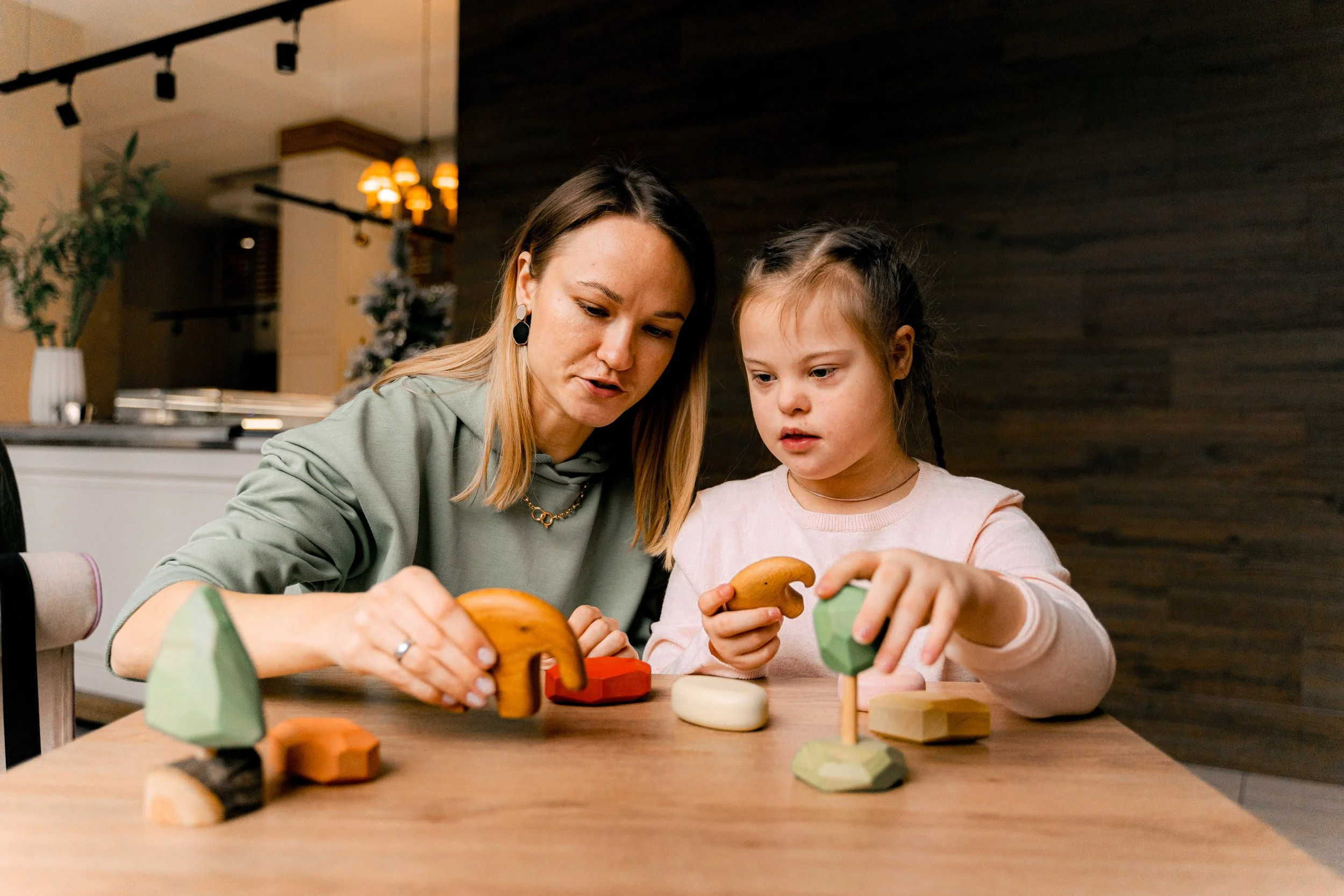
My mom is a special education teacher and former Special Olympics coach. Growing up, I had insights into the needs and gifts of people with intellectual, learning, and developmental disabilities in particular. Her experience also showed me how far our culture needs to go in order to fully include people of all physical, intellectual, and emotional abilities.
As a result, I’ve been excited to see Catholic women stepping up through entrepreneurship to support disabled students. I spoke to two of them and am sharing their insights and experience (lightly edited for clarity and conciseness) as Catholic women in business here.
Margaret Walsh is the founder and director at Secret Garden Educational Pathways, which provides consultations and learning support to private schools and homeschooling families. She recently published a book called “A Catholic Approach to Literacy for Struggling Students” and is pursuing a Ph.D. in educational psychology starting this fall.
Michelle Brown is the founder of The Little Ways Project, a nonprofit that provides professional development, instructional coaching, consulting, and advocacy services to schools, families, and educators. She is the author of “The Little Ways Project: Reimagining Special Education in Catholic Schools” and also sells autism acceptance apparel and accessories.
1. Tell us a little about your career background.
Margaret:
In a nutshell, I've run a business managing teachers and interfacing with clients as well as conducting research and crafting curriculum all while receiving my master’s degree. I’ll soon be pursuing my Ph.D.
Michelle:
My professional journey has been guided by a passion for helping every student belong. I have spent over 30 years in education. I hold credentials in both general and special education, a master’s degree in special education with a specialization in severe affective needs, and have completed doctoral coursework in educational leadership at the University of San Diego.
My areas of expertise include autism, dyslexia, Universal Design for Learning (UDL), design thinking, executive functioning, literacy intervention, behavior support, and inclusion. I am honored to serve as a U.S. Fulbright Specialist in the area of inclusive education, which allows me to collaborate with educational institutions around the world to share best practices in inclusion, accessibility, and educational innovation.
2. Why did you start your business, and how did it come about?
Margaret:
The first reason I founded my business was because of Jesus’ quote, “Let the little children come to me, and do not prevent them” (Matthew 19:14). This stemmed from an experience I had with two high school students who struggled with comprehension. I was working with them in a secular clinic but knew they were Catholic. I asked them to compare Hades, the Greek underworld, with purgatory. They thought it was the same thing. We went on to have a fruitful discussion about why purgatory is necessary before we enter Heaven. After 20 minutes of discussion, their faces lit up, and the concept of purgatory clicked for them. That was an unforgettable moment that has informed all of my teaching since. I want students to know about God, and I see this as a very special way in which I can help in the vineyard.
The second reason I started my company was because of the interactions I saw between students and their teachers in a secular setting while in San Francisco. There were many different individuals teaching, most of whom were great, but some of whom should not have been working with children. I didn’t ever want Catholic families to feel like they needed to turn to secular support to educate their children well, especially since secular schools are ideological battlefields.
Michelle:
I identified a recurring pattern. Schools often had good intentions when it came to including students with disabilities, but many educators felt uncertain about how to move from simply placing students in classrooms to actually including them. At the same time, I witnessed incredible teachers making small, intentional accommodations that transformed learning. These were often not large programs or expensive initiatives; they were simple acts of understanding, flexibility, connection, and empathy.
As a Catholic educator and parent, I began reflecting on the teachings of St. Thérèse of Lisieux and her Little Way of doing ordinary things with extraordinary love. I realized that authentic inclusion often happens in the same way — not through grand gestures but through small actions that communicate to a child and family, “You belong here.” Ironically, this is what Catholic educators instinctively already do.
The idea for The Little Ways Project became even more personal as I worked with students with diverse learning needs and saw the magic of inclusion — the increase in confidence, communication, and organic friendships. The benefits of inclusion applied to everyone involved, and the joy was contagious.
My children attended Cathedral Catholic High School in San Diego, which offers the Options Program, an inclusive program for students with special needs. My children were peer mentors and gained so much for this experience. I couldn’t help but wonder why a K-through-8 school couldn’t replicate a similar model.
Meanwhile, I listened to countless parents who desperately wanted their children to participate fully in their Catholic communities and schools. I met Catholic educators who wanted to support them but felt they lacked training, support, resources, funding, practical strategies, etc. I saw students whose gifts were overlooked because people focused primarily on their challenges.
I started The Little Ways Project to bridge that gap. My goal was to provide practical tools, encouragement, and a vision of inclusion rooted in human dignity, strengths-based practices, and the belief that every person is created in the image and likeness of God.
At its heart, The Little Ways Project is built on the simple belief that inclusion is not primarily about programs, policies, or compliance. It is about people. It is about students, families, and communities. It is about seeing the gifts in every individual and reimagining what’s possible.
3. What strengths do you bring to entrepreneurship as a woman and as a Catholic?
Margaret:
I believe I bring an empathy to the scene of special education that is rooted in my Catholic faith and an understanding of the value of each student. Sure, there are many women in education, but few of them understand how to truly love their students as children of God. If you love someone as a child of God, then you want the best for them. In my line of work, love is evident in my pursuit of real solutions to special education through remediation and not just enabling solutions like only accommodations and modifications. I want students to be able to perform at a higher level academically, if possible, and will put all my energies into helping them improve their abilities. This will ultimately also prepare them to receive the Word of God through learning.
I also care deeply about ethical business practices, treating honestly both with clients as well as with my staff. I always keep “Rerum Novarum,” by Pope Leo XIII, before me when working with my staff and teachers.
Michelle:
My greatest strengths come from a combination of purpose, perseverance, relationship-building, and service.
First, I bring a deep sense of mission, which helps me make decisions based on impact. Second, I bring resilience and adaptability. As a mother of four, an educator, nonprofit leader, and entrepreneur, I have learned how to navigate unexpected challenges, solve problems creatively, and continue moving forward even when the path is extremely uncertain. Third, I am a natural connector and relationship-builder. I believe meaningful change happens through authentic relationships.
As a Catholic, my faith provides both a foundation and a guide. Entrepreneurship often involves uncertainty, but I have learned to balance planning with trust, recognizing that not every outcome is within my control. The values of humility and service influence how I approach leadership and decision-making.
Finally, I bring educational expertise combined with a unique ability to see possibilities where others see barriers. I consistently focus on identifying strengths, building on them, and celebrating progress.
4. What challenges do you face as a Catholic female entrepreneur?
Margaret:
I think the biggest challenge I face, especially as a woman who is naturally more quiet, is that many people who hear of my work tend to think: “That’s cute; you’re a reading tutor” when, in fact, my work touches on language and rationality, reaching far beyond just the words on a page and touching the human soul. There is so much more to how schools and teachers could approach learning that gets lost in the typical role of “reading tutor.” One of the reasons I am pursuing a Ph.D. is so that I can stand on the research I do and help Catholic schools see their way through the weeds of the ineffective accommodation supports they are trying to borrow from the public schools.
I am definitely a pioneer in this field, thinking outside the box and solving problems with unorthodox solutions that stem from Thomistic philosophy. I have always admired St. Joan of Arc and use her as my role model in this spiritual battle. She was often dismissed as “the maid,” and yet God was able to use her to lead entire armies. Though I do not even come close to her sanctity and leadership, she is an inspiration for any woman.
Michelle:
The first challenge is navigating uncertainty. Entrepreneurship requires taking risks, building something from the ground up, and often moving forward without a clear roadmap. As someone who has spent much of my career in education and nonprofit work, I have had to learn a lot of new skills in business development, marketing, and fund-raising.
I have also experienced the challenge of balancing multiple roles. Throughout my life, I have been a mother of four, educator, volunteer, and leader. These responsibilities have enriched my perspective, but they have also required challenging decisions about priorities, time, and energy. Learning to set boundaries and recognize that I cannot do everything myself has been an important part of my growth.
As a Catholic entrepreneur, I sometimes find myself operating in environments where faith-based values are not always understood or prioritized. Remaining grounded in principles such as human dignity, service, integrity, and compassion while navigating business environments can be challenging.
5. What advice do you have for Catholic women who are interested in being entrepreneurs or who have just launched a business?
Margaret:
I would say that women should first definitely go out and gain experience in the field they wish to lead in. Further education is sometimes helpful but not always needed. I would also say there are going to be times of plenty and fallow times, so reap well in the times of plenty to take you through the fallow times.
Unfortunately, there isn’t always professional courtesy. This was a very hard lesson I learned within the first few years of work. I trusted one particular partner a lot and then found myself sold out and almost had to close my business. I would encourage women to be as ethical as possible but also be “wise as serpents, gentle as doves.” You want the term “Catholic” to not be a free pass on professionalism but an extra gilding to what you offer.
Last, but not least, though being a female entrepreneur has its challenges 一, often related to being brushed aside in bigger conversations or not consulted 一 this should not turn into a bitter feminism. There is a great deal of humility and prayer that should be part of any female entrepreneur’s life. We don’t want to harden our hearts or mar the beauty of femininity in our work. Women are not men, and so we must play to our strengths in leadership.
Michelle:
My advice to Catholic women who are interested in entrepreneurship is to start with your mission. What problem are you called to solve? Who are you called to serve? Entrepreneurship is challenging, and there will be days, weeks or months where you will feel discouraged. Keep going. A clear sense of purpose will sustain you when motivation is not enough.
Second, don't wait until everything is perfect. Many women spend years preparing, researching, and doubting whether they are ready. In my experience, confidence comes through action. Start with what you have and where you are, and trust that you will learn along the way. It may feel scary, and you will probably make mistakes, but that's where the learning and growth is happening.
Third, recognize that your gifts have value. Many women, especially those in helping professions, struggle with charging for their expertise. Remember that earning income from your work allows you to serve more people, expand your impact, and sustain your mission over the long term.
I would also encourage women to build a strong community around them. Seek mentors, collaborate with others, and surround yourself with people who are doing the work and who will support both your professional goals and your faith journey. Entrepreneurship can feel lonely, but it doesn't have to be.
Most importantly, stay rooted in your faith. There will be moments when doors close, plans change, or outcomes don’t match your expectations. Pray and trust. The Rosary and novenas have been some of the most important tools in my entrepreneurial journey. I’ve learned that success isn’t simply about achievement — it’s about having faith in the work God has given you.
6. How does your faith impact your work (other than your audience)?
Margaret:
Because I am working with language and language-based learning disabilities, I get to work with a really amazing part of the human person: the brain and how we receive knowledge into our soul. Language is a sign of our rationality. Our rationality, involving intellect and will, is the way we are made in the image of God. I see my work as touching our true nature: why we are made (to know, love, and serve God) and what we are made for (Heaven) and all in the context of intellect and will.
Psychology deals more with emotions and passions, but learning and language deal more purely with the intellect. This is such an amazing feature of my work that is again often overlooked and sometimes gets lost in day-to-day practical matters, but it is never lost in the overarching service to students, families, and schools.
Michelle:
At the heart of my faith is the belief that every person is created in the image and likeness of God and has worth and purpose. That belief has profoundly influenced my work in education and entrepreneurship. It is why I have dedicated much of my career to advocating for individuals with disabilities and creating inclusive environments.
My faith impacts my work through hope. In education, there are often situations where progress is slow or challenges seem overwhelming. My faith reminds me to focus on possibilities rather than limitations and to trust that growth and transformation is taking place.
St. Thérèse of Lisieux and her Little Way have been especially influential in my life. I am reminded that meaningful change comes through small acts of love. That philosophy became the foundation of The Little Ways Project and is the guide to my approach to inclusion.
My faith also influences how I define success. I ultimately measure success by impact. Did someone feel seen? Did a family feel supported? Did a student discover their strengths? Did a school become more welcoming? Those are the outcomes that mean the most to me.
7. How do you integrate your faith into your work?
Margaret:
I integrate faith in two ways. The first is loving all those I work with, even the most challenging students. They are children of God and deserve full respect and love. My work with them is how I can help them carry their cross, even a little.
The second way is with my understanding of the faculties of the soul. Using Catholic anthropology, I am able to better pinpoint and address the particular cognitive function that is going wrong and streamline any remediation we administer. Rather than throwing everything at the wall and waiting to see what sticks, I am able to step back, look at what is going on, and then determine which targeted intervention will best suit the student. If I didn’t understand learning in light of the faculties of the soul, I would get lost in the many remediation strategies out there.
Michelle:
One of the most important ways I do this is by viewing every person as someone created in the image and likeness of God. My faith also influences the questions I ask. Rather than focusing first on learning limitations, I look for strengths, gifts, and potential. This perspective has shaped my work in inclusion and special education because I believe every person has something of value to contribute.
I integrate my faith through service-oriented leadership. Christ modeled leadership through humility, accompaniment, and service to others. I strive to bring those same qualities into my work by listening carefully and helping others reach their goals.
Prayer and discernment are also important parts of my professional life. I spend time in prayer and reflection, asking how I can best use my gifts to serve others.
8. What is your favorite part of the work you do?
Margaret:
My favorite part of my work is seeing the joy and success when students start believing in themselves and when they become more capable. I am fascinated by the studies I’ve done and can’t wait to research more in my Ph.D. program, but it is really the students and my own work as their helper that bring me the most joy.
I’ve been part of so many “Aha!” moments when students grasp a fundamental truth or realize they can now read on their own, and the light that shines on their faces never gets old. I also want all of my work to help students come to know God. When I helped those two high schoolers understand purgatory, I cried all the way home that day, realizing that these kids had a hard time understanding basic academics, which also can sometimes result in a hard time understanding essential truths of the faith. I don’t ever want students to be limited in coming to know God because they haven’t been supported academically.
Michelle:
I have worked with so many students who were underestimated, families who felt discouraged, teachers who felt overwhelmed, and schools that wanted to become more inclusive but weren’t sure where to begin. It is so rewarding when all of this shifts.
I especially love the moments when a student experiences real belonging. Those moments may seem small to others, but they change the course of a student’s life.
I also love empowering educators and families. Teachers often enter the profession because they want to make a difference, and parents want the very best for their children. When I can provide practical tools, encouragement, and hope that help them better support a child, I know that the impact extends far beyond a single conversation or professional development day.
What I find most meaningful is creating connections between students and peers, schools and families, faith and practice, strengths and opportunities. Inclusion (and learning!) is ultimately about relationships and belonging, and helping build those connections is what brings me the greatest joy.
I believe my work allows me to participate in something much larger than myself. Every time a person feels seen, I believe that I am living out the mission that first inspired me through St. Thérèse’s Little Way. The work isn’t just about programs or services; it’s about helping people recognize their own God-given strengths and gifts and opening their eyes to the strengths and gifts of others.
9. Michelle, can you share more about your devotion to St. Thérèse?
My devotion to St. Thérèse of Lisieux began when I was in seventh grade. My teacher introduced me to St. Thérèse and her Novena, and I decided to pray it. At the end of the Novena, I received a rose. It felt like tangible evidence that God had heard my prayer.
That experience left a lasting impression on me. In eighth grade, I chose Thérèse as my Confirmation name, and my devotion to her has continued throughout my life. Over the years, I have prayed the novena countless times during moments of despair, challenge, transition, and hope. Roses continued to appear.
One of the reasons I feel such a connection to St. Thérèse is because of her promises that after her death she would “let fall a shower of roses” and that she would spend her time in heaven “doing good upon earth.” Throughout my life, I have experienced those roses as signs of encouragement and confirmation that my prayers are being heard and that God is at work, even when I don’t see immediate results.
Her autobiography, “Story of a Soul,” impacted my faith. She makes it clear that great love — not great deeds — is what makes us holy. God is present in every moment of our life, no matter how ordinary or insignificant it may seem. Every moment becomes an opportunity to grow in holiness when it is lived with love.
Perhaps the quote that has influenced me most is when St. Thérèse writes, “My vocation, at last I have found it…My vocation is Love!” That message has helped shape my own vocation.
10. What else would you like people to know about you and/or your company?
Margaret:
We’d love for families and schools to reach out to us if their students are struggling. We offer reading screening, remediation classes, parent and teacher coaching, school advising, professional development, and ongoing webinars.
If we are not the right resource, we gladly try to help people determine where to turn for the support they need. If we are the right resource, we strive to support them even when finances may seem tight.
We’d love to partner with any schools that want to support their teachers through professional development, need help creating support plans and structures, or are willing to pioneer alternative structures of support. Catholic education used to lead the way, and we’d love for Catholic schools to be the leaders again in special education support. Catholic schools have the flexibility to support students in more meaningful ways than public schools.
Michelle:
Including disabled students is not someone else’s responsibility; it belongs to all of us. Every one of us has the ability to make our schools, workplaces, churches, and communities more welcoming and accessible through small, intentional acts.
If you are an educator, school leader, parent, parish leader, organization, or community member who wants to create more inclusive Catholic parishes or schools for neurodiverse students, I would love to connect with you. I am always seeking opportunities to provide professional development, consulting, speaking engagements, program development, or collaboration.
Together, we can create schools, parishes, and communities where every child is welcomed.
Taryn DeLong co-wrote Holy Ambition: Thriving as a Catholic Woman at Work and at Home (Ave Maria Press) to help women hear and follow God’s unique calling for their life. Following her own calling, she currently spends much of her time caring for her two daughters, including homeschooling her preschooler. Taryn studied psychology and education at Meredith College in Raleigh, NC. Before becoming a mother, she worked in university advancement and then B2B editing. Since Taryn was a child, she’s called the Raleigh area home, and she and her husband are now raising their family in a small Raleigh suburb. In addition to supporting Catholic women, she's passionate about inclusion of people with disabilities in life, work, and (most importantly) the Church. She also enjoys reading and playing the piano.
Connect with Taryn on Instagram, Facebook, LinkedIn, her blog, or Substack.