

Four Lessons from the Holy Family
“The family is the first and fundamental school of social living: as a community of love, it finds in self-giving the law that guides it and makes it grow” (Pope St. John Paul II, 37)
It is Monday night and we are seated around the dining table. After a few minutes of joyfully picking off the cheese on top of his chili, our two-year-old suddenly begins wailing over his inability to scoop a large piece of bacon onto his spoon without it falling off. My husband and I share a wry smile and I sigh. As the meltdown continues, I remember the kitchen stove that needs to be wiped down, the bathroom that needs to be cleaned, and my internal to-do list for my business that keeps growing and I am tempted to give into annoyance. Instead, by God’s grace I internally pray, “Thank you God for this life and this moment.”
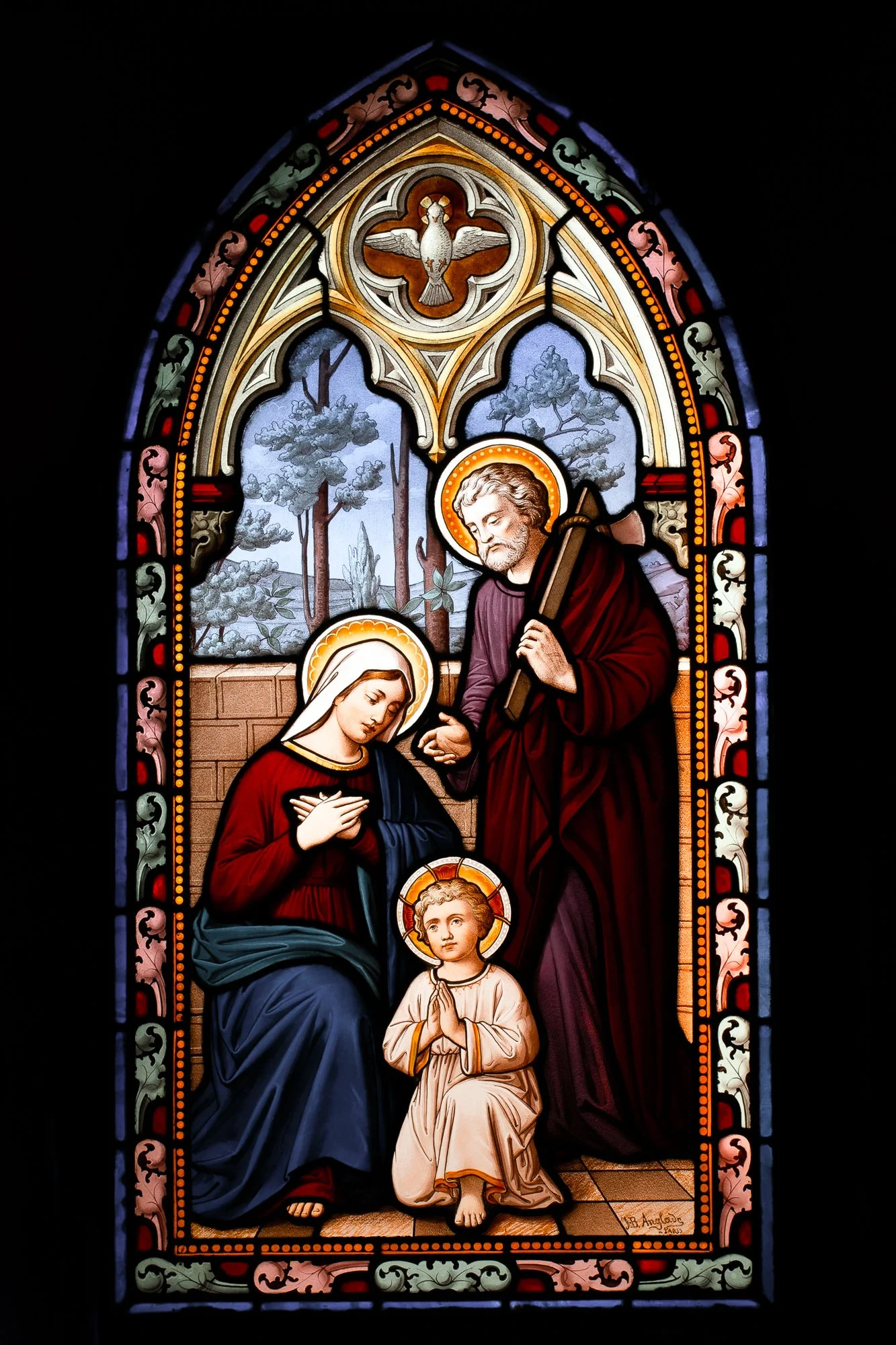
Today marks the feast day of the Holy Family of Jesus, Mary and Joseph. In all honesty, when I imagine life for the Holy Family, I am tempted to believe it is one of ease, events going according to plan, and no conflict, especially around the dining table. At times this has led me to find the Holy Family unrelatable and yet still a model to emulate. I sometimes find myself gazing at an icon of Jesus, Mary and Joseph that is above our kitchen sink, shaking my head saying, “But you wouldn’t understand.”
However, after recently meditating upon the Holy Family’s flight to Egypt, my perspective began to change.
The Flight Into Egypt
In Matthew 2:13 we read about the Holy Family’s flight into Egypt, an unknown and hostile land. “...behold, the angel of the Lord appeared to Joseph in a dream and said, “Rise, take the child and his mother, flee to Egypt, and stay there until I tell you. Herod is going to search for the child to destroy him.”
While in Egypt, one can only imagine Joseph’s anxiety in looking for work to provide for his family. What persecution did they face as Jews in a foreign land? Was Mary welcomed by the other women when she went to gather water or buy food at the market? Did she need to work to provide additional income for their family? Did they have enough to eat? How did they navigate being in a pagan land with idol-worshipping and inhumane sacrifices? What was it like raising Jesus without familial support?
Additionally, how did Mary and Joseph feel once they learned of the massacre of the holy innocents, the male children ordered by Herod to be killed in Bethlehem who were two years of age and under? Did it grieve them to know that only their son survived?
Although scripture does not provide the answers to these questions, our imagination can lead us to picture their struggles and challenges.
However, more than that, how did they navigate these challenges and disappointments? The answer to that can be found in the life of Jesus and His followers.
Pray for and Forgive Those Who Persecute You
In Luke 6:27-28, Jesus says: “But to you who hear I say, love your enemies, do good to those who hate you, bless those who curse you, pray for those who mistreat you.” We can imagine that Jesus learned this first-hand from Mary and Joseph as they recounted to Him how they were denied room at the inn the night of His birth (Luke 2:7). The Holy Family also likely experienced persecution while living in Egypt and had many opportunities to turn the other cheek and pray for their persecutors.
In our daily lives, we are called to pray and forgive those who have hurt us or others. Although it is difficult, as Jesus promises, “If you forgive others their transgressions, your heavenly Father will forgive you” (Matthew 6:14).
2. Do Not Worry About the Future
As women and Catholic professionals and business owners, there is much that we can worry about. However, Jesus is clear about the fruitlessness of worry and why we should entrust ourselves to the Father instead. “Therefore I tell you, do not worry about your life, what you will eat [or drink], or about your body, what you will wear. Is not life more than food and the body more than clothing? Look at the birds in the sky; they do not sow or reap, they gather nothing into barns, yet your heavenly Father feeds them. Are not you more important than they?” (Matthew 6:25-26). We can assume Jesus learned this very integral lesson from watching His parents ask the Father for what they needed and trusting that He would provide.
3. Practice Contentment and Gratitude
As we meditate on the life of the Holy Family, we can imagine there may have been moments when they did not have what they needed and had to go without. Like St. Paul, it is likely that the Holy Family took the posture of, “... I have learned the secret of being well fed and of going hungry, of living in abundance and of being in need. I have the strength for everything through him who empowers me” (Philippians 4:12-13).
In moments of dire need, we can imagine Joseph leading Mary and Jesus in prayer, giving thanks to God for the difficult circumstance and asking that His will be accomplished in that moment. This act of gratitude in moments of difficulty is not meant to diminish our needs or ignore the pain, but is a call to put things in perspective. Cultivating this spirit of gratitude and contentment will lead to greater emotional resilience and a greater ability to navigate adversity with a positive outlook, which is backed by contemporary neuroscience.
4. Abandonment to the Will of the Father
In their individual journeys and together as a family, the Holy Family beautifully models abandonment to the will of the Father. From the beginning, Mary gave her fiat to the angel Gabriel, St. Joseph was obedient to the messages he received in his dreams, and Jesus declared that He came to do the will of His Father throughout his earthly ministry.
Jesus also emphasized the importance of this abandonment by including it in the prayer He taught to His disciples: “This is how you are to pray: Our Father in heaven, hallowed be your name, your kingdom come, your will be done, on earth as in heaven” (Matthew 6: 9-10). Ultimately, He demonstrated this abandonment in the Garden of Gethsemane when He prayed, “... My Father, if it is possible, let this cup pass from me; yet, not as I will, but as you will” (Matthew 26:39) and then finally on the cross when He allowed Himself to be crucified for our sins. To truly imitate the Holy Family and ultimately Christ, we are called to align our desires with God’s will.
Keeping these lessons in mind will help us build a community of love, grow in patience and embrace the joys and sufferings that come. Let us invite the Holy Family to journey with us most especially this Christmas season, as they truly do understand what we are going through and desire our good.
Valentina Imhoff, MBA, is a career coach helping others encounter God through their work. She has lived and worked in six countries and has over 10 years of experience in a variety of industries. In addition to coaching, she facilitates Called & Gifted workshops to help others discern their charisms. Her greatest loves are her husband, son, and trying new recipes in the kitchen. Connect with Valentina at fiatcareercoaching.com, or tune into her podcast on YouTube, Apple Podcasts, or Spotify.