The Divine Designer: Finding God in Everyday Design
"You formed my inmost being; you knit me in my mother's womb. I praise you, because I am wonderfully made; wonderful are your works! My very self you know…in your book all are written down; my days were shaped, before one came to be.” (Psalm 139: 13-16)
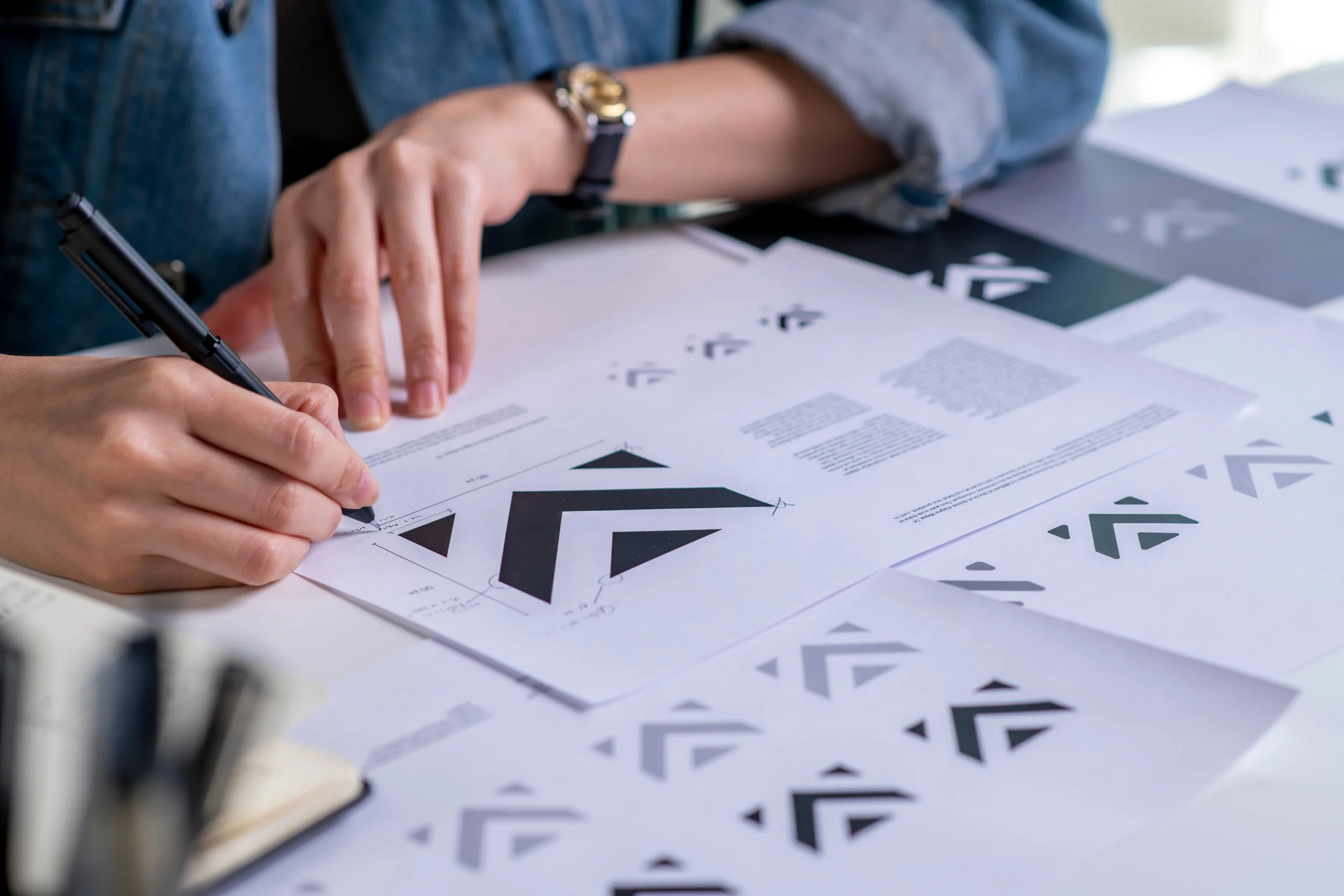
A lot of people assume design—especially graphic design—is simply about making something look pretty. I don’t blame them; much of the process happens behind the scenes. But design is so much more than decoration: it provides structure, communication, and problem-solving.
As Catholic women, we can approach design with a unique perspective: we believe in a God who is not only the Creator, but the ultimate Designer.
Design Is Everywhere
The very first page of the Bible reminds us: “In the beginning, God created the heavens and the earth. (Genesis 1:1)”
We can pause to look at the world all around us to realize the majesty of God’s creation: in a towering mountain range bathed in the sunset, in the vivid purple color of a blooming hydrangea, or in the peaceful wash of blue ocean waves.
But design isn’t just in the grand or the obvious. It’s also in the ordinary.
Think of a chair. Every chair you’ve ever sat in was first imagined, then shaped with intention. Someone studied how the human body rests, how weight is distributed, how comfort and function might meet–and then they created a chair accordingly.
If human beings can create purpose in the seemingly ordinary parts of our life and world, think about how much more intentional God is. Every mundane detail of life—every pattern, function, and rhythm—echoes His designs.
For me, this truth comes alive every time I attend Mass at the Basilica of the National Shrine in Washington, D.C. The space itself inspires and compels me: the gilded domes above my head pull my gaze upward toward heaven, the mosaics shimmer with light that symbolizes Christ’s own light, and the carvings of saints inspire me to live like they did. None of this is accidental. The design of the Basilica isn’t just decorative; it orients the heart toward worship and directs us toward God.
Design Is Intentional
Psalm 139 above assures us that our very selves were “knit together” by God with purpose, down to every strand of hair. Everything about us was intentionally designed— our talents, our stories, and our very beings.
The same truth extends into human-powered design. When I choose colors for a brand identity or select typefaces for a website, I ask questions such as: “What emotions will this palette evoke?” “Will the audience understand this message clearly?” “Does this symbol reflect the truth of what this brand offers?”
These aren’t superficial choices. They’re deliberate, purposeful, and rooted in clarity. That intentionality is a reflection of God’s own way of designing. Consider the tree: its roots burrow deep to anchor and nourish; its branches stretch outward to bear fruit and receive light. Every part serves a function.
In the same way, our design work—whether creating logos, crafting presentations, or simply organizing a home or schedule—has meaning beyond appearances. When I organize my three-year-old son’s toys around our home, I try to make it easy for him to take objects out and to put them away in a clutter-free environment. My effort in creating a sense of order for myself and my family echoes that of God’s ability to create a sense of order in how he fashioned human bodies, trees, and everything in between.
Design Solves Problems
One of the first instances of God using his power of design was in His creation of Eve. He saw that Adam needed a companion; in the true fashion of an efficient designer, he used one of Adam’s ribs to create Eve. His design was both intentional and practical: Eve was similar yet distinct, created as a partner.
This same pattern continues throughout human history. When people grew tired of sitting on bare ground, someone designed the chair. When travel beyond our legs and horses became necessary, we designed the wheel. When sounds and gestures weren’t enough, we designed symbols, languages, and images.
At its heart, design solves problems: seeing a need, envisioning a possibility, and shaping something to meet it.
Before I begin any design project, I ask myself and my clients: “What need are we serving through this?” I create a logo, a website, and even a single Instagram post with purpose. Every choice I make in the process–in color, type, layout, etc.– is deliberate and meant to serve that purpose, just as God’s own designs in creation are both beautiful and purposeful.
Designing Our Own Lives
As Catholic working women, we are constantly called to design: students design study habits and routines that help them flourish in school, professionals design workflows, presentations, or strategies that bring clarity to a team or project; mothers design rhythms of family life that balance nurture, order, and joy; and entrepreneurs design brands, systems, and client experiences that reflect their mission.
When we embrace our work as a kind of design, we start to see it as participation in God’s own creative order. Our spreadsheets, lesson plans, client decks, and even dinner tables become places where God’s intentionality is made visible through us.
The next time you feel any tug of doubt about whether your work is meaningful, remember that you are made by the ultimate Designer. You bear His image when you create, organize, plan, or bring beauty into the world.
I have to remind myself of this often. Whether I’m sketching out a logo for a client, piecing together a website, or even arranging toys back into bins after my toddler has gone to bed, I try to pause and see it all as part of God’s design. I’m bringing order, purpose, and beauty into the world in small, but real ways.
Your designs don’t need to be perfect; they just need to be intentional. And when they are, they reflect the truth that our lives—and our work—are not random, but purposely and wonderfully made.
Lisa Johnson, the Creative Director of Catholic Women in Business, is the Founder and Designer of Verve & Concord, a branding and design studio that helps Catholic female founders tell their brand stories. Her previous experience includes creating brands and designing digital, print and experiential materials for nonprofits and associations. Lisa is an alumna of the University of Florida. She still considers herself a Floridian despite being a Washington, DC resident for 15 years and counting, where she lives with her husband and son.