

“This saying is trustworthy: If we have died with him we shall also live with him; if we persevere we shall also reign with him. But if we deny him, he will deny us” (2 Timothy 2:11-12).
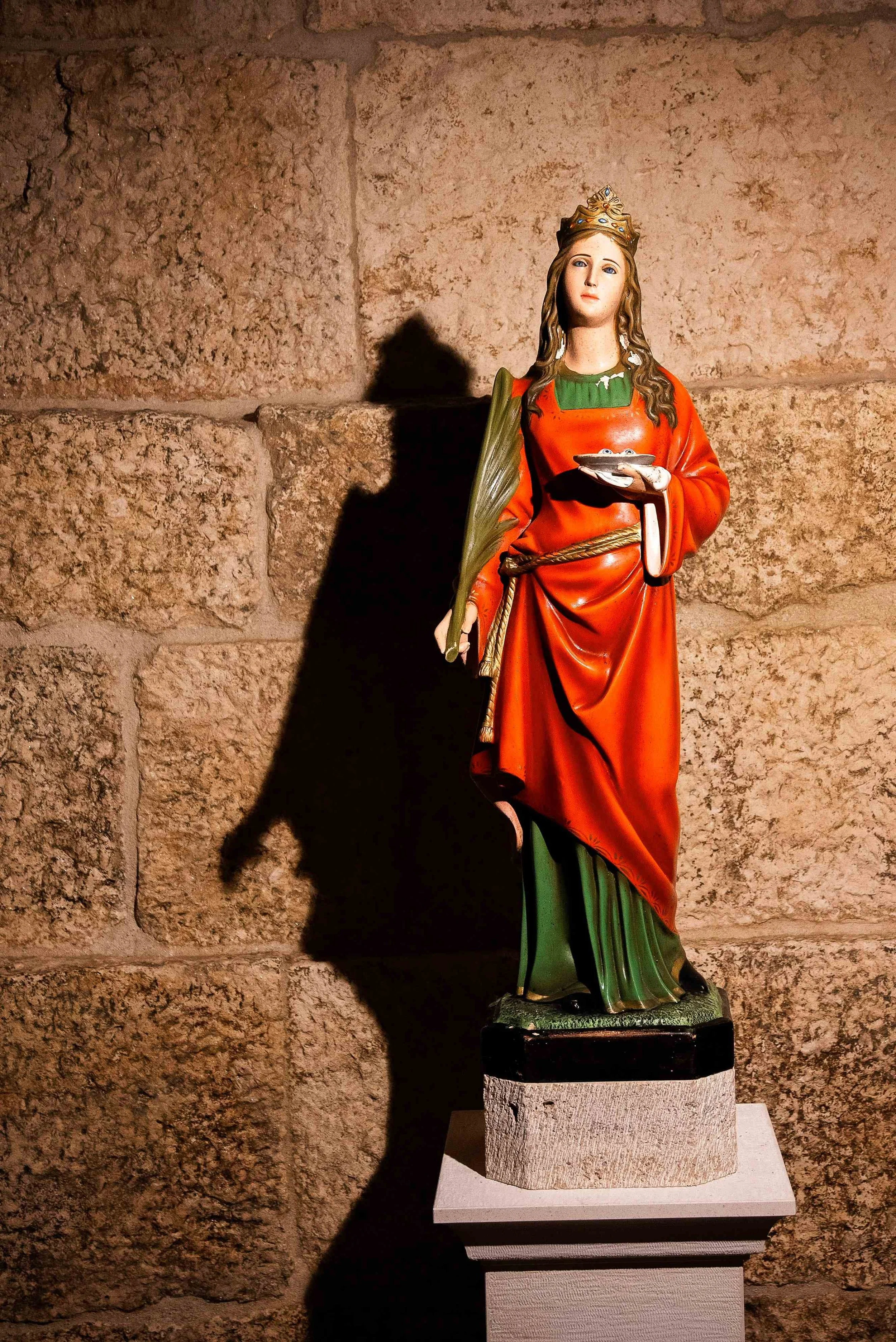
St. Catherine of Alexandria was an 18-year-old, noble woman living in Alexandria, Egypt, part of the Roman Empire during the reign of Maximus. She was the daughter of a pagan nobleman who experienced a vision of the Blessed Mother and the Child Jesus. She became a Christian following this vision and went to Maximus to implore him to stop persecuting Christians. The Emperor pitted learned men against her, and she defended the faith with such confidence and clarity that he then brought his most learned scholars to argue with her, hoping to cause her to deny her faith.
St. Catherine emerged triumphant from these challenges. Many of those arguing with her were so convinced by her defense of Christianity that they became Christian and were immediately martyred. Maximus was enraged and had Catherine scourged, with the intent to have her martyred on the wheel. When she touched it, the wheel broke, and she was beheaded. The symbol of the broken wheel represents her tremendous courage and commitment to her faith in Christ.
The University of St. Catherine, located in St. Paul, Minnesota, is my alma mater. I attended St. Kate’s, as it is affectionately called, in the mid-1970s, at the height of the decline of our culture, which set off cultural demise and moral corruption that continues in our country to this day. St. Catherine of Alexandria refused to deny her faith and willingly underwent martyrdom, just as we must do in our era.
St. Catherine: Example of Strength and Commitment to the Faith
The broken wheel symbolizes St. Catherine’s strength and conviction, as well as her determination to stand firmly for what she believed was right. The broken wheel is the emblem on the class ring for St. Kate’s, which sits on a bed of black onyx, making it admirable and its wearer a living witness to St. Catherine’s strength, conviction, and holiness.
Even though she was tortured and imprisoned, St. Catherine remained faithful to her belief in Christ and the experience provided by her vision. Emperor Maximus tried to force her to deny her faith, but because her life was in Christ, to deny Him would have been no life at all.
What would we do if we were an 18-year-old, faced with such a choice: deny our faith in Jesus Christ or be put to death by a horrible, excruciating, torturous method? How could we even make such a choice?
This was the nature of the Apostolic Era, or the first 300 years of Christianity, in which St. Catherine lived and was martyred. St. Catherine is the patron saint of lawyers, librarians, philosophers, students, and teachers. Her feast day is November 25. She is one of 14 saints who are considered Holy Helpers. If you know a young woman who is arduously trying to remain committed to her Catholic faith, encourage her to read the story of St. Catherine of Alexandria and take her as their patron saint.
A Novena to Saint Catherine can be found at: https://www.praymorenovenas.com/st-catherine-of-alexandria-novena.
Prayer to Saint Catherine of Alexandria
Glorious St. Catherine, virgin, and martyr,
help me to imitate your love of purity.
Give me strength and courage in fighting off the temptations
of the world and evil desires.
Help me to love God with my whole heart
and serve Him faithfully.
O St. Catherine, through your glorious martyrdom
for the love of Christ, help me to be loyal to my faith
and my God as long as I live.
Amen.
Dr. Kate Walsh-Soucheray taught high school religion in St. Paul, Minnesota and then became a licensed marriage and family therapist. She has master’s degrees in theology and marriage and family therapy, and a doctorate in educational leadership. Dr. Kate and her husband John have been married for 42 years and they have three, adult married children and six, soon to be seven, grandchildren. Dr. Kate is retired and writes and speaks for Catholics.