

Celebrating Different Strengths - and Desserts
There are different kinds of spiritual gifts but the same Spirit; there are different forms of service but the same Lord; there are different workings but the same God who produces all of them in everyone. (1 Corinthians 12:4-6)
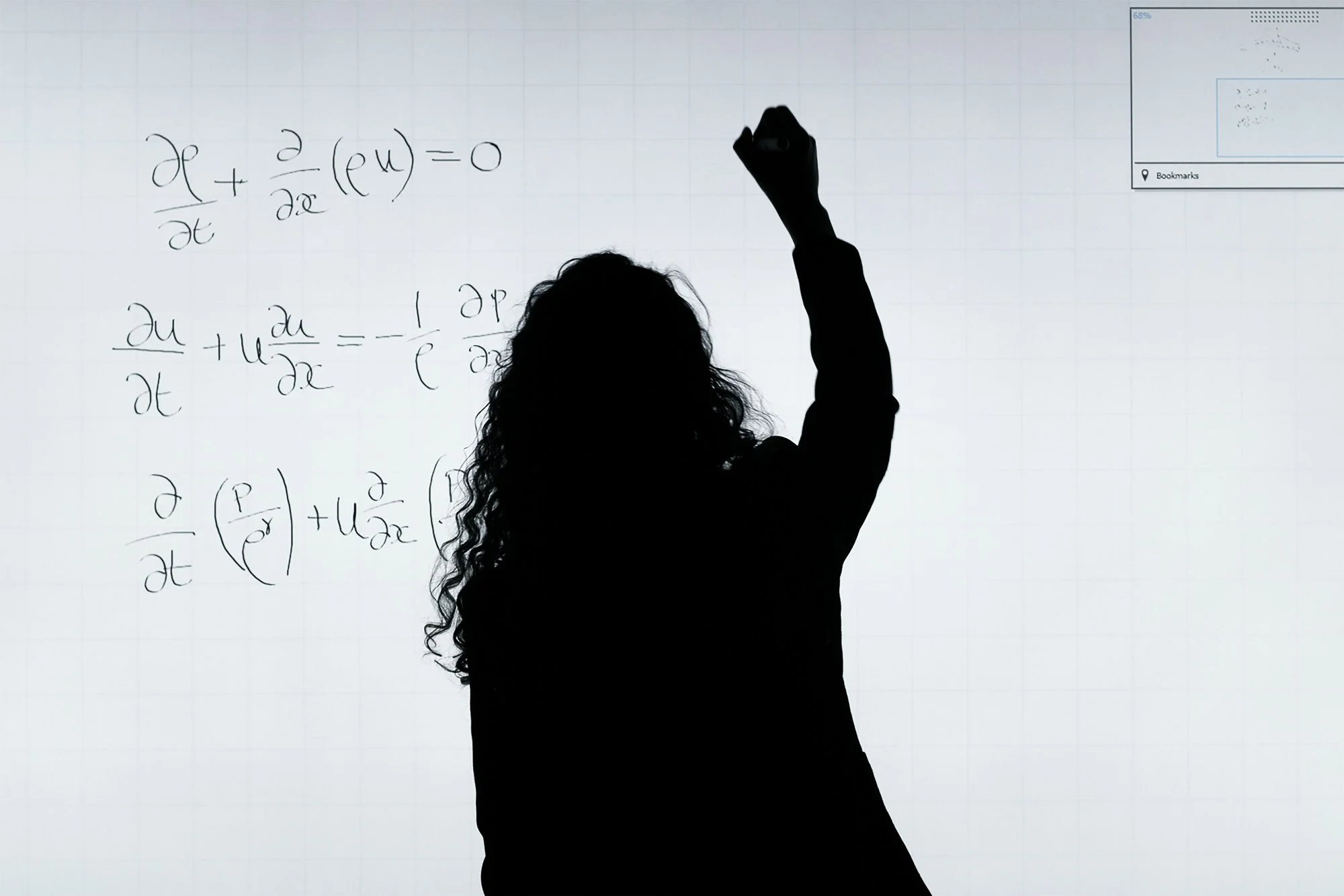
Each year, Pi Day (the celebration of Pi, or the ratio of a circle’s circumference to its diameter, 3.14) falls on March 14. No matter the size of the circle, the ratio of its circumference to its diameter will equal Pi, or roughly 3.14. (‘Pi’ comes from the Greek letter for p, or 𝝿. )
However, much like my fear of math, Pi is irrational – which means that the decimal form never ends or becomes repetitive. Apparently at least 6 billion digits of Pi are now known.
Historically, Pi Day for me has been an excuse to a.) make pie or b.) studiously ignore the fact that I do not understand Pi AT ALL and could not possibly compare the ratio of any circle’s circumference to its diameter if you offered to pay me, in pie or dollars.
As far back as I can remember, math felt like something scary, that “I just can’t do”, that did not make sense to me in the least. I struggled through my required math classes – including calculus – in high school with daily afterschool help sessions from my teachers. In college, I tested into remedial algebra and still, despite having already taken algebra twice, ended up taking advantage of office hours as frequently as they were offered.
Part of this was not understanding the point of math problems (I still don’t know why I would need to calculate the rate of a bathtub draining out water if the drain was unplugged. Why would I continue to try and take a bath without a plug in the drain? Could I take a shower? Shouldn’t I focus instead on fixing the bathtub?) but also largely because my brain processes information differently. In my late 30s, I was diagnosed with ADHD, and once I accepted that I do things in ways that do not necessarily match any textbooks, things got easier. Sort of. I mean, I’m not attempting to do calculus anymore.
My husband also struggles with math and neither of us enjoy or understand it well. But then, we had a daughter who LOVES math so much she asked for math flash cards and math toys for Christmas and was overjoyed when she got them. Suddenly, I found myself playing Math Path Monster and questioning where and when, exactly, I started having the ‘I’m just not good at this” message about math.
Encouraging Curiosity about Math
My daughter is only six, so I have no idea if she’ll be a math whiz who takes higher-level calculus in high school or not. But regardless, it’s made me think a lot about continuing to encourage her curiosity and enthusiasm about math without handing down any of the “this is just too hard, I can’t do it” negativity I’ve traditionally had. In fact we’ve worked hard to reinforce with her that everyone is different, with different strengths, interests and identities – but everyone is equally worthy of respect and dignity. This is a lesson I keep learning myself when wrestling with Excel, to be honest. I have to remind myself that I am worthy no matter my abilities at any given task.
If you’re blessed with a math-loving child alongside a personal struggle to do even basic addition, consider:
Simply listening and praising. (Wow! So cool that you love this so much.)
Finding math or STEM-focused games that you can play together (There are lots of good board and card games, and I was also very heartened that GoldieBlox is bringing back their STEM toys for girls!)
Asking questions about what they’ve been learning. (Apparently my daughter is learning about vertices. I’m still not 100% sure I know what those are.)
Learning new content together.
Looking into math and STEM-focused extracurricular activities. These range from free family-focused math circles and community events to more expensive, formal afterschool programs.
Find those math-loving people in your life that can really share that interest. We’re lucky to have several friends and family in finance, engineering and other STEM fields.
Consider a prayer to St. Hubert, patron saint of mathematicians, to grow in interest in expertise (and also for you, if you’re having multiplication problems thrown at you while trying to merge on the highway like I am).
Finally, it’s important to recognize that everyone has different strengths and skills. Can I do a complex algebra equation quickly (or ever)? Possibly. But I know that I have good reading comprehension skills, can summarize complex information quickly, and on top of that – make a mean pie.
Whatever your feelings about math, be kind to yourself this Pi Day. And have some pie – you deserve it.
Sarah Battersby has a Bachelor's in English and a Master's in Social Work. She supports her community through a career in philanthropy and through volunteer work. She loves reading, baking, being a mentor, and discovering new things with her daughter. She lives in North Carolina with her family.