

Unique and Unrepeatable: A Q & A with Ginny Kochis
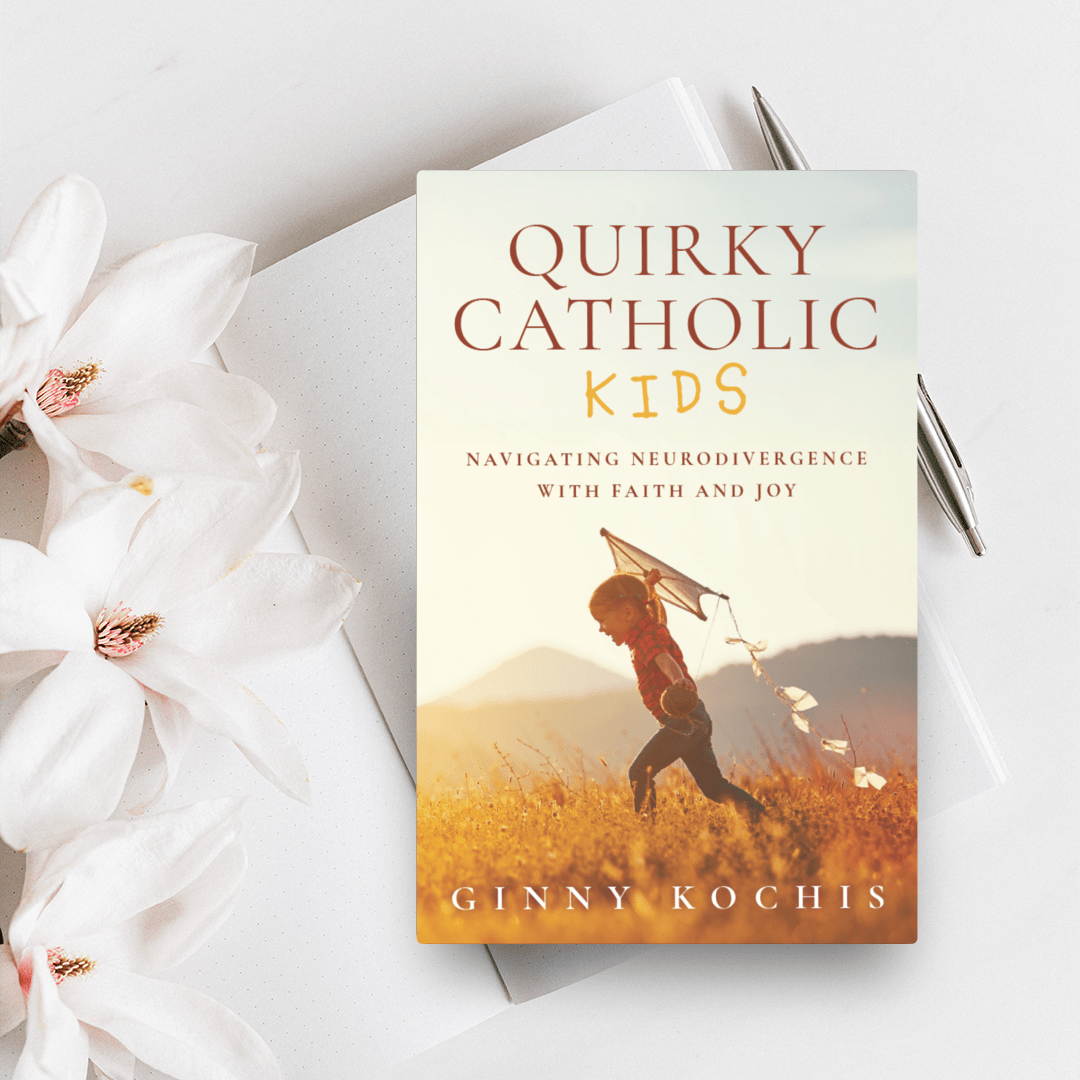
Ginny Kochis is a Catholic wife, mom, author, and neurodivergent parent coach from Northern Virginia. She founded Quirky Catholic Kids to provide support for Catholic moms raising neurodivergent children. The author of over a dozen books for neurodivergent kids, teens, and their parents, Ginny’s latest book, “Quirky Catholic Kids: Navigating Neurodivergence with Faith and Joy,” is available from Sophia Institute Press.
1. For those who may not have experience with neurodivergence, what are the most important things to know?
I feel like definitions are always helpful, because it’s hard to understand what a thing is if you don’t have context for it. A neurodivergent individual is anyone whose brain receives, interprets, or processes information differently from the expected standard. This can manifest in many different ways — from sensitivity to sensory input, to differences in social interaction or impulse control. There’s nothing wrong or broken in a neurodivergent brain, but it can be challenging to go out and live and work and be in a world that’s built for more typical wiring. This can be really hard for kids because not only are they learning what it means to be human, they’re also learning what it means to be a human whose operating system runs on iOS while most everybody else’s runs on Windows.
2. What would you like to share about your own neurodivergence and that of your family members?
We are a neurodivergent household, but I didn’t realize that until I started seeing my and my husband’s neurodivergent traits reflected in our kids. We have three children — one in college, one in high school, and one in elementary school — and our diagnoses include autism level one (not impacting language or intelligence), obsessive-compulsive disorder, generalized anxiety disorder, ADHD, and giftedness (giftedness isn’t a diagnosis, per se, but it is a form of neurodivergence). We’re all pretty creative, disorganized, and intense.
3. We know that God can use all things for our good (Romans 8:28). How have you seen God use your — or your family members’ — neurodivergence for good?
One of the things I’ve tried to instill in my children is that neurodivergence is morally neutral. It’s not good or bad — it just is. I talk about this in my book, too, because I think so many Catholic families feel like they’ve somehow failed at being Catholic if they have a kid who has an invisible difference (a developmental difference that you can’t see by looking at someone’s appearance). Of course, some specific traits and talents tend to occur alongside certain diagnoses: my daughter, who is autistic, is an incredibly talented artist with a gift for negative space, and her memory is like a steel trap. My son, who has OCD, has an intense attention to detail. My daughter, who has ADHD, has impeccable comedic timing and solves problems in unorthodox ways. These are all good, beautiful things, and they are part of who they are, just like the challenges that may come with their individual diagnoses. Each and every brain is unique and unrepeatable, whether it is neurodivergent or not.
4. What are the most important tips shared in your new book?
I wanted to strike a balance between emotional and practical support. In part one, I encourage several mindset shifts that I think are helpful for parents of neurodivergent children. We definitely cover that neurodivergence is morally neutral, but also discuss tips for letting go of shame, grief, and fear. There’s such a stigma around neurodivergence that it’s easy to fall apart when your child receives a diagnosis. But a diagnosis is a good thing — it’s a tool. In part two, I provide actionable strategies for some common neurodivergent struggles. I include chapters on developing emotional regulation skills, so kids can learn to process and express emotions effectively; on digital moderation; soothing anxiety; building social skills; and more. If I had to choose one tip as most important, I would say it’s probably the chapter on emotional regulation skills. So much of the human experience — as God designed — exists in our feelings and their expression. Once a child learns how to understand what his or her body is saying, navigating the world becomes much easier.
5. How can “typical” mothers, grandmothers, or friends help support those who are neurodivergent and those who care for them?
A willingness to understand and include those who are neurodivergent makes such a huge difference, especially because so many neurodivergent families (moms especially) worry about being judged.
6. What lessons from your book do you think could be applied to the workplace? How might this information translate into hiring or working with neurodivergent people?
I think it’s especially pertinent to neurodivergent women in the workplace. Women are much more likely to be misdiagnosed, or, if they are diagnosed, to mask their differences. The potential for debilitating stress grows exponentially, and, as I’ve seen in my own experience, neurodivergent women in the workplace experience burnout at higher rates than their neurotypical counterparts. Across the board, though, I think the book applies to professionals, both neurodivergent and neurotypical. For neurodivergent adults, I hope that it will give them the confidence and the vocabulary they need to advocate for themselves in the workplace. For neurotypical adults, I hope that it will provide a new perspective on behaviors they may have witnessed, and a willingness to be more open to an employee’s or colleague’s needs.
7. You’ve written several books — how did your journey as an author develop?
I started a blog in 2017, actually, and then everything moved forward from there. I started creating resources for the families in the community I’d built, and then I published my first full-length book, “Made for Greatness” (the Catholic growth mindset journal) in 2019. Several books followed, published under Zelie Press, my own imprint, including two young adult novels in 2023 and 2025. “Quirky Catholic Kids: Navigating Neurodivergence with Faith and Joy” is my first traditionally published book. With that one, I think I was just in the right place at the right time, as Sophia Institute Press was looking to expand its offerings in the arena of mental health and brain science.
8. What tips do you have for others who “have a book in them” about navigating the writing and publishing process?
Patience, persistence, and practice. Everybody can write a book — it’s just a matter of getting out of your own way and working at it. Some books take a few weeks to a month to write. Others, like my first novel, took roughly 20 years (in fits and starts). I think it helps to know your goal and to make decisions based on that goal in the long run. Devoting a little time every day to writing, working on your craft, sharing your work with other people — all of that is good.
9. What else would you like people to know about neurodivergence, your journey, or your work?
If there’s anything I would want a reader, a mom, or a family to garner from my work at Quirky Catholic Kids or any of my books, it’s that there truly is no such thing as normal. There’s only the wonder you are meant to become.