

Finding Healing in Jesus’ Wounds
O Lord, my God, I cried out to you for help and you healed me (Psalm 30:3).
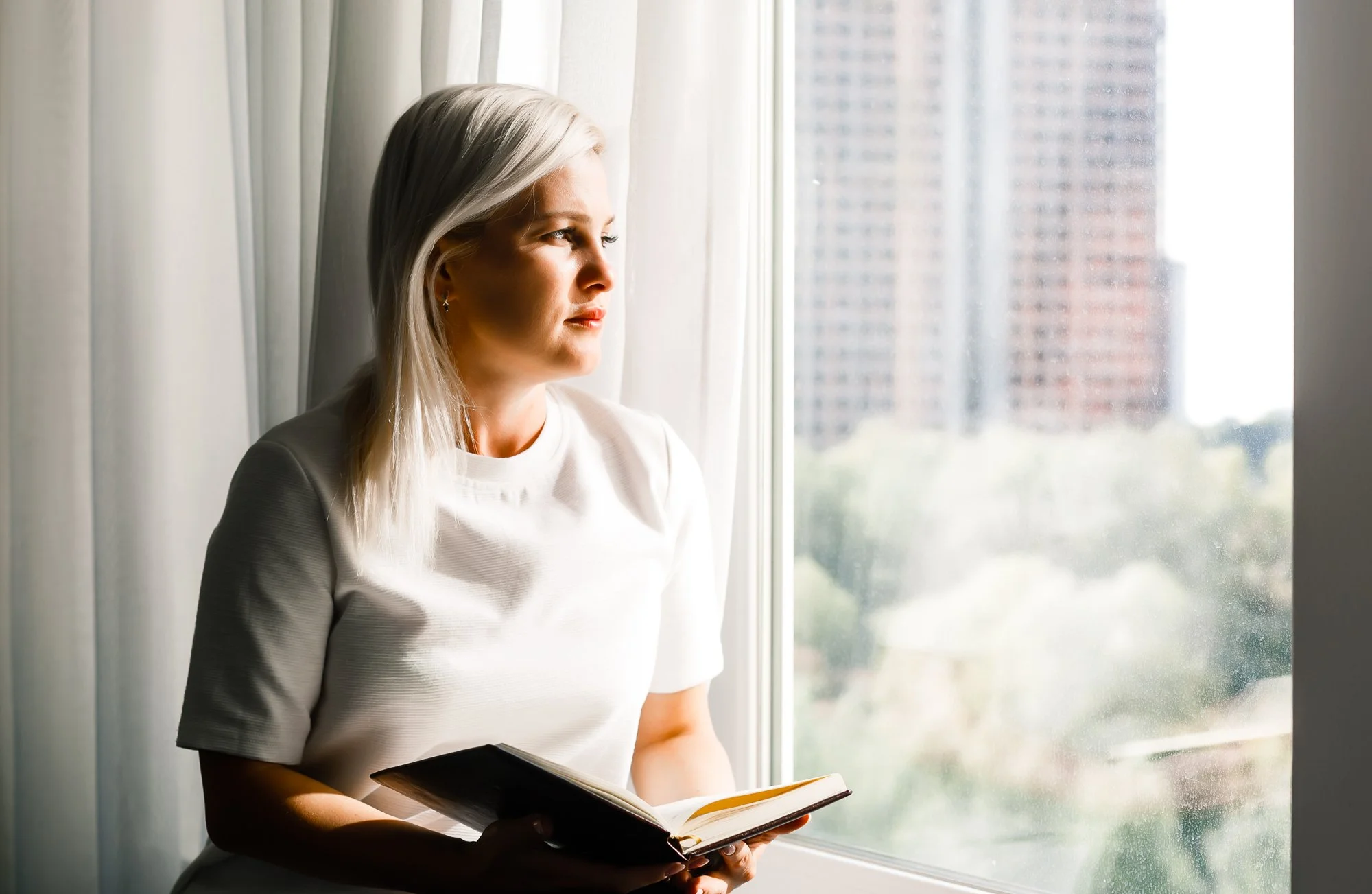
I want to share something that’s been on my heart for a while: how the wounds we carry – especially the ones we rarely talk about – can follow us into our work, into the way we lead, create, and build our businesses or ministries.
For context, I work with women who have experienced a challenging or traumatic birth experience. They come to me because I help them process their experience, but what usually bubbles to the surface isn’t what they’re expecting. Many discover deeper wounds they weren’t aware of before. These wounds show up in their marriage, their mothering, their femininity, and their relationship with God the Father.
The same is true for the business owner.
We tend to think of work and faith as separate, or at least compartmentalized. We work hard to be productive and successful, and we pray hard to be faithful and good. It’s not bad to do this, but it does leave a void. There are places where we feel stuck, overwhelmed, or afraid in business and these are really places where our past wounds are still holding us back.
Jesus’ wounds – His very human suffering – offer us not just comfort, but a way forward to bring our wounds into the light and find healing that touches everything we do.
I often work with women who are high-achievers: entrepreneurs, leaders, mothers who manage it all. On the surface, they seem confident and capable (and they are!), but underneath, many carry heavy burdens that show up as anxiety, body image issues, guilt, burnout, imposter syndrome, or a constant pressure to prove themselves.
For many, these wounds trace back to early experiences of feeling unsafe, unheard, or broken, often in the most intimate ways. In my case, one of the most common but least talked about sources of such wounds is birth trauma – not just the medical complications or physical pain, but the emotional and spiritual experiences that come with birth. Many of my clients felt out of control, scared, disrespected, or isolated when they were giving birth. These wounds don’t just disappear after delivery and they can live quietly in the body and heart for years.
As Pope St. John Paul II wrote in Mulieris Dignitatem: “Motherhood is linked to the personal structure of the woman and to the personal dimension of the gift.”
When birth wounds that personal structure – whether physically or emotionally – the ripple effects can impact a woman’s sense of identity, self-worth, and ability to trust. When these wounds aren’t healed, they show up everywhere including how women run their businesses or engage in their ministries. You might notice:
A constant feeling that you’re “not enough” no matter what you achieve.
Pushing yourself harder until you break, rather than asking for help.
Difficulty trusting colleagues, clients, or even God with your work.
Feeling disconnected from your true calling or purpose.
Feeling the need to work hard so that you are taken care of financially or “just in case” you need that income later on.
While I primarily work with women, I’ve seen these truths hold for men, too. Their wounds may not come from birth in the same way that their wives experienced it, but they often carry unspoken pain from childhood, fatherhood, failed leadership, or the pressure to always be strong. For Catholic men, the call to lead, protect, and provide can feel overwhelming when they’ve never been shown how to do those things from a place of wholeness.
Many men push down their wounds, thinking that’s what strength looks like, but just like women, they carry those wounds into their marriages, fatherhood, work, and faith. They show up as anger, passivity, perfectionism, or emotional shutdown.
And, just like women, they need the healing presence of Christ not only to be forgiven but to be made new. The Church is at Her best when She becomes a place where both men and women can bring their full selves, including their pain, and find not just mercy, but restoration.
Jesus’ Wounds: Our Invitation to Healing
In the Gospel of John (20:27), Jesus invites Thomas to touch His wounds after the Resurrection after Thomas didn’t believe (sometimes I’m right there with you, Thomas). These wounds are not just scars of suffering, but they are signs of victory, love, and redemption.
St. Paul reminds us in 2 Corinthians 12:9: “My grace is sufficient for you, for my power is made perfect in weakness.” This means our weaknesses - our wounds - are not barriers to God’s work but the very places where His power shines brightest.
The Church has always recognized the importance of human suffering, but sometimes we shy away from naming wounds that aren’t just physical. When we bring our deepest hurts to Jesus, especially those connected to our womanhood and motherhood, we allow His love to heal and transform us in ways that ripple into every part of our lives.
Why the Church Needs to Talk More About Mother & Father Wounds
When Jesus showed His wounds to Thomas, He didn’t hide them. He literally invited someone else into them. In doing so, He revealed something essential about healing; that it’s not meant to happen in isolation.
If Jesus, in His glorified body, still bears His wounds, then we can stop pretending ours don’t exist. We can stop hiding them in quiet corners of our motherhood, our marriages, or our work.
This is easier said than done, especially when the Church doesn’t talk enough about the wounds that happen inside the home. The family may be the “domestic church,” but what happens when the walls of that church are cracked by trauma, disappointment, or silence?
Mothers are often the emotional backbone of a family. When a mother is carrying pain from a difficult birth, postpartum anxiety, past traumas, or the unspoken grief of unmet expectations, the whole family feels it. But, so often, she doesn’t say a word, because she thinks she’s the only one, or that to admit it is to fail.
The same is true for men.
Fathers carry wounds, too, and often ones they don’t have language for. Whether it’s the pressure to always provide, a strained relationship with their own father, or the helplessness they felt watching their wife suffer in birth, men often shoulder deep pain without support. They may not call it trauma. They may not even recognize it as a wound, but nonetheless, it still shapes how they love, lead, and live.
When these wounds, both maternal and paternal, go unnamed and unhealed, they fracture the foundation of the home. Women disconnect. Men withdraw. Children absorb the atmosphere of tension, even if no one says anything out loud.
When the domestic church is built on quiet suffering instead of honest healing, the larger Church feels it too.
We need spaces within parishes, communities, and homes where these wounds can be spoken and not fixed overnight, not analyzed to death. They just need to be spoken, held, and brought into the presence of Christ, where all healing begins.
Why is this important? Because the Church isn’t just called to protect the family structure. She’s called to restore the hearts inside it.
What It Means to Bring Healing Into Our Work
For Catholics trying to live out their vocations in business or ministry, healing these wounds isn’t just“nice to have.” Healing these wounds is completely vital.
When we try to push past pain without addressing it, it shapes how we work:
We might take on too much because we’re afraid to say no or set boundaries.
We might avoid asking for help because vulnerability feels unsafe.
We might struggle with imposter syndrome or self-doubt, even when we’re successful.
We might lose sight of why we started our work in the first place.
Healing begins by recognizing that our wounds are part of our story, not the whole story. It means inviting Jesus into those parts we keep hidden, trusting that He wants to heal what’s broken.
Steps Toward Healing and Wholeness
Healing from deep wounds takes time and gentle work. Here are some ways to begin:
Name Your Wounds - Sometimes, just acknowledging pain without judgment can be freeing. Journaling, spiritual direction, or conversation with someone you trust can help you uncover what’s been buried.
Invite Jesus Into Your Story - Bring your pain to prayer –not just to ask for strength, but to offer your brokenness to Him. He knows what it means to suffer and to carry wounds.
Practice Self-Compassion - When old fears or doubts arise, remind yourself that weakness isn’t failure; it’s a doorway.
Seek Support - Find communities or coaches who understand the spiritual and emotional side of healing.
Set Boundaries in Work and Life - Healing means learning when to say no and protecting your time and energy, so you can be fully present where it matters most. Setting boundaries is actually KIND. It allows others to know where you stand and keeps everyone in a comfortable spot.
Wounds don't disappear just because we've moved on. They don’t stay neatly in the past, and they don’t wait to be addressed when it’s convenient. They show up in our parenting, our marriages, our leadership, and our faith – sometimes in obvious ways, sometimes quietly beneath the surface.
As annoying as these old wounds can be, Jesus doesn’t avoid them. He enters in and uses it for our sanctification. He touches what’s been ignored. Somehow, in the mystery of it all, what once brought shame or fear becomes the very place His grace takes root.
We don’t need to have it all figured out. We don’t need to fix everything before we step into the work He’s given us. But, we do need to be honest with ourselves, with each other, and with God.
When we stop hiding our wounds, we create space for healing, for connection, and for the kind of work that flows not from hustle or fear, but from a heart being made whole.
Editor’s Note: This article was originally published on Catholic Owned.
Brigid Tebaldi is a wife, mother of five, homeschooling mom, and board certified health coach specializing in Spiritual Somatic Rewiring - a signature framework that combines nervous system repair, subconscious belief work, and the truth of scripture to create permanent transformation at the root level. When she's not in session you'll find her outside with her kids, deep in a conspiracy theory podcast, or in the kitchen baking something that disappears as quickly as it comes out of the oven.