

Book Review: The Language of Your Body
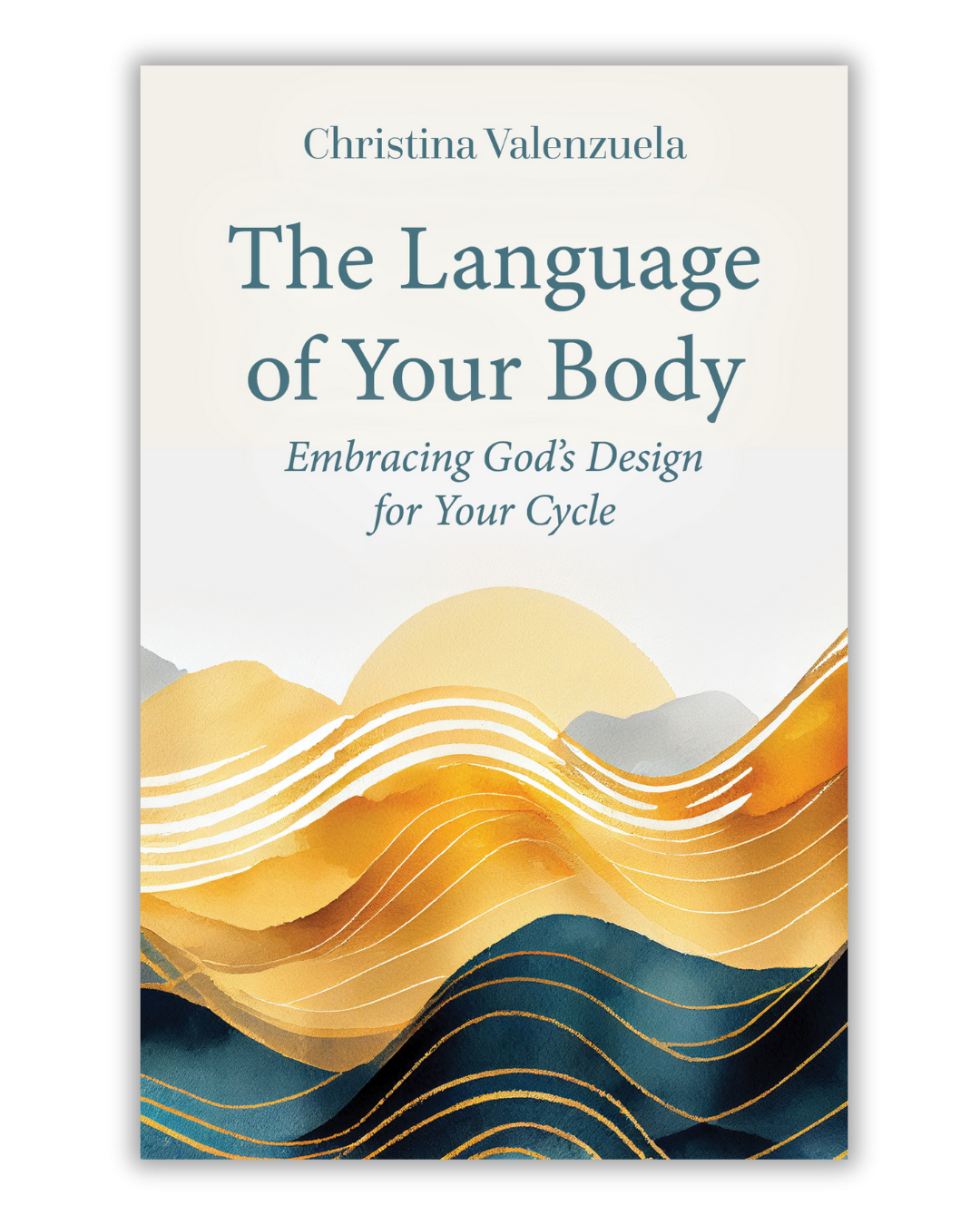
Every once in a while, you come across a book and think: Every woman I know should read this. Teenagers, mothers, religious sisters, women who are committed single and those beyond menopause. When you find this book, you pray that tools like social media and the natural interconnected way women communicate will disperse the message worldwide. The Language of Your Body is that book.
Here’s why: The author, Christina Valenzuela, bravely tackles a topic few would dare to speak about beyond intimate conversations with their mother or best friend. More than that, Valenzuela reframes the material so that embarrassment begins to be replaced with a sense of wonder of what our bodies can do. What are we talking about?
Our menstrual cycles.
Wait, don’t roll your eyes, assuming it would be impossible to shift your thinking from the “inconvenient at best, debilitating at worst” event of your monthly period. If you’re like me, by the end of the book, you’ll better understand why our periods aren’t just something we have to put up with and aren’t just a taboo topic to avoid in the company of men. No, as the author describes, “The fact is that menstrual cycles as we experience them now are an intimate aspect of our embodied experience of womanhood” (p 35).
I found it particularly helpful – in an age when there’s a cultural push to blur the lines of being male and female – to have words that so well articulate what makes the sexes unequivocally different. Our bodies’ ability to menstruate is an inextricable and unduplicable part of our female identity.
Valenzuela is careful not to dismiss the difficulties that accompany our cycles. She doesn’t sugarcoat or minimize the burden our periods put on our physical and mental well-being. But she’s asking questions about our view of this natural function and how that fits in spiritually with our theology as Catholics.
Our menstrual cycle holds a sacred place when examined through the lens of the Church. Afterall, as the author points out in the book’s introduction, if men’s bodies had such a significant biological event every month, one wonders if they would have been silent about it or hidden it out of shame (p 18). But why would the Catholic Church have any interest in women’s periods? It turns out, there are many.
The hidden work of a woman’s body is much more than a biological function, Valenzuela explains. Beginning with the truth that God is our creator and declared each thing he made “good,” we see that buried deep within every woman’s cycle is a spark of the divine, a reflection of his image and likeness.
The Spiritual Dimension of Menstrual Cycles
A respectful discussion of the body is a topic the Church cares deeply about. We honor motherhood, revere pieces of art that depict a pregnant or nursing Mary, and contemplate in prayer the idea that God’s Son grew and was nourished in a woman’s body. None of this would be possible without menstruation. Bridging science and theology, the author reminds us that as members of the Body of Christ, women’s bodies deserve to be respected in their entirety, including all their functions.
While I was reading, a specific question surfaced concerning the Blessed Mother, the woman par excellence whose womb was a tabernacle where Jesus dwelled. Did she experience period bleeds? The author gives a thoughtful response, drawing on encyclicals, Scripture, and science (I’m not spoiling it – refer to pp 33-34). When a woman carries a child, the author notes, we, too, become like tabernacles, where the image of God dwells (p 43).
The author writes: “It is true that the menstrual cycle is associated with these other functions of pregnancy, birth, and nourishment because cycles are ordered toward procreation. But why are they not mentioned? Everything the menstrual cycle does is at the service of creating an environment where pregnancy is possible, so it does seem an odd omission that our theology has not expressed the same reverence for cycles as it does for pregnancy.” (p 43)
This book invites the Church to deepen its theology of “woman” by examining the cycles that keep her body whole and healthy. The more we learn about our bodies, the deeper we understand the God who created them. The more familiar we are with the language of our bodies, the more we can plumb the depths of the knowledge and truths God gave us to know in and through our bodies.
Our cycles can be described, as Valenzuela does, as “strange, strong, and beautiful” (p 17). It is mysterious, as we are one of the very few mammals that menstruate on a regular schedule, and it is messy. Let's be honest. The Language of Your Body is a beautiful and thoughtful contribution to the ongoing conversation about the sacredness of the human body, the biology of a woman, and the sacramental nature of all corporeal functions, not just birthing but bleeding.
Now is an opportune time for this book to restart a public and ecclesial discussion that will help women claim their cycles for good. There is no shame in a model designed by God to be the very source of sustaining and regulating life itself. Read this book and participate in the conversation by sharing its message with your daughters, mothers, and within your parish.
Natalie Hanemann is the founder of Be/Wilder Writer, LLC, a company exploring the intersection of creativity, wilderness, and spirituality. Since 2000, Natalie has worked in book publishing as an acquisitions editor, developmental editor, and ghostwriter. In 2024, Natalie expanded her business to include her love of the outdoors through retreats and meditative adventures. Learn more at www.youbewilder.com.