

“Death and life are in the power of the tongue” - (Proverbs 18:21).
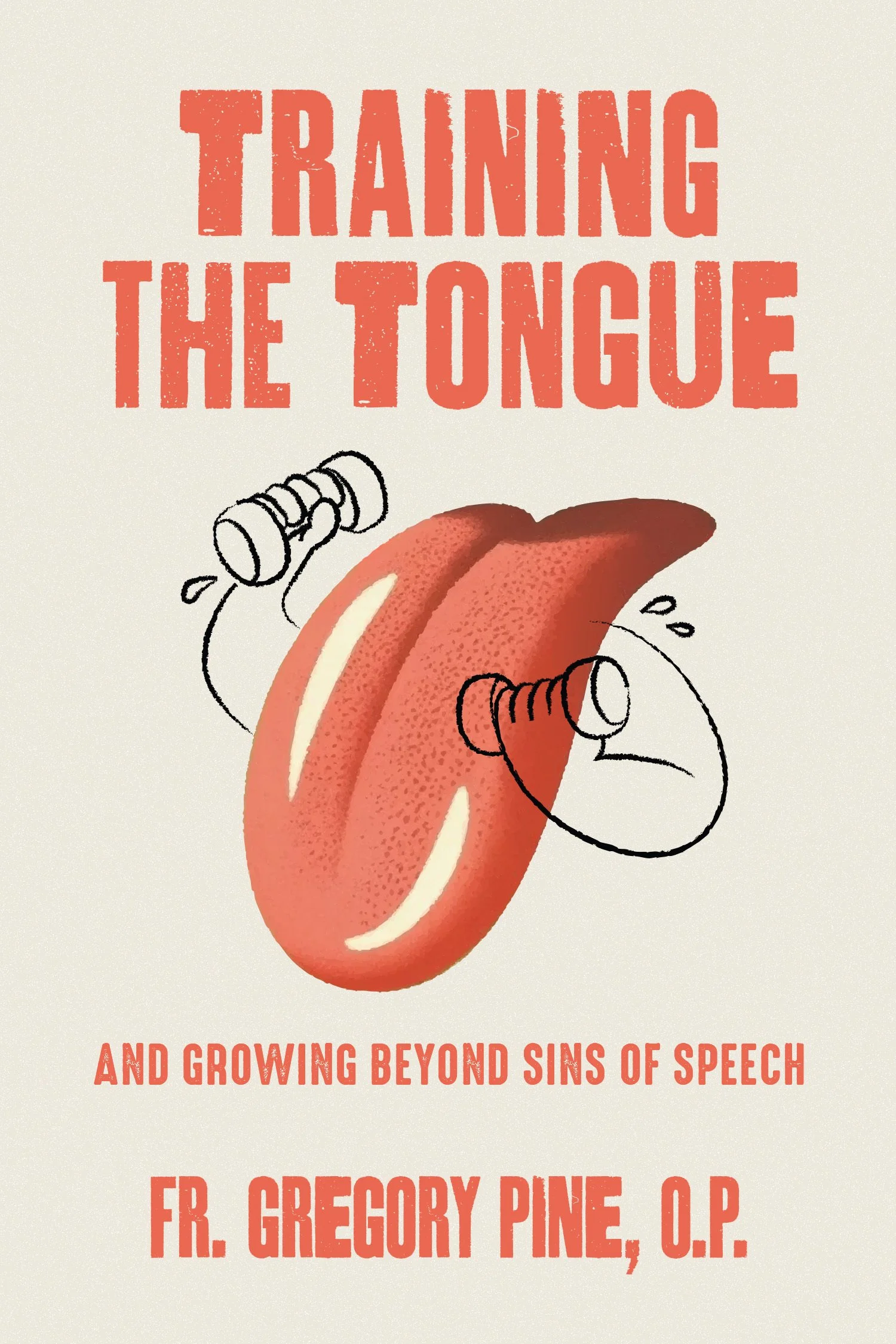
How often do you wish you could take your words back? How much time do you spend practicing virtuous speech? We train our bodies and our minds, but have you ever considered training your tongue? Fr. Gregory Pine, O.P. not only says we should train our tongues, but provides a practical plan for making real changes.
Fr. Pine’s new book “Training the Tongue and Growing Beyond Sins of Speech” offers more than a list of what not to do. He reminds us we were given the power of speech in order to create communion with God and with each other. Then, he offers habits we can cultivate to foster that communion.
In acknowledging there are “so many ways we trip over our tongues,” Fr. Pine shares tips on making fruitful conversation, offering correction, playing with humor, giving instruction, and talking to God. Naturally, the art of listening is addressed with the Dominican friar circling back to the concept of communion.
“In any stage of conversation, but especially in the early stages, the most important contribution you can make is to listen well,” he writes in Chapter 2. “There are few things so painful as a conversation in which interlocutors simply wait for each other to stop speaking so that they can interject the ideas they’ve been formulating in inattentive silence. Whatever that is, it’s not a conversation. It’s more like alternating monologues or dueling soliloquies. As such, it holds out little hope for genuine communion.”
Fr. Pine addresses common sins of speech that won’t surprise you: lying, gossip, indelicacy, blasphemy. He also discusses subtler sins such as detraction, derision, boasting, and indifference to the truth. When we want to be on the right side – or have the last word – more than we want to know the truth, we don’t create communion. When we have “just enough evidence to be dangerous” we need to resist the temptation to judge and be willing to say the freeing words “I don’t know.”
The distance created between people by online communication can be particularly problematic for some common sins of speech. It’s much easier to lob insults, make derisive jokes, and generally talk bad about people across the space-time-continuum that is the Internet.
“It’s a real temptation not only to be in the know but also to be funny in our belittlement of others,” Fr. Pine writes.
When we sin with our speech, we push people to the periphery of conversations creating the opposite of the communion God intends for us. Critically, we must remember God created the person on the receiving end of our sometimes-too-sharp tongue.
With Fr. Pine’s suggestions, we can cultivate virtuous playfulness, attentive listening, good-willed vulnerability, and genuine interest in others. We also must surround ourselves with other people who also value their neighbors – both online and “in real life” – who will support and enhance our tongue training. Beyond eliminating sins, our speech can bring both us and others closer to God. We just need to tune in to what He wants us to do with the power of our words.
“Our tongues don’t need to be tamed as much as they need to be unleashed in the service of God and man,” says Fr. Pine.
“Set a guard, Lord, before my mouth, keep watch over the door of my lips” – (Psalm 141:3).
Catholic Women in Business’ Managing Editor Sharon Bengel is a cradle Catholic with more than 30 years of experience in writing, communications and publication design. A recovering newspaper reporter with a crush on the prophet Jeremiah, Sharon loves discovering new things about the scriptures. She runs an LLC out of her home office in southwest Ohio where she keeps a stash of chocolate for her grandkids.