

Inspiring Children with the Saints
A Q & A with Author Caitlin Bootsma
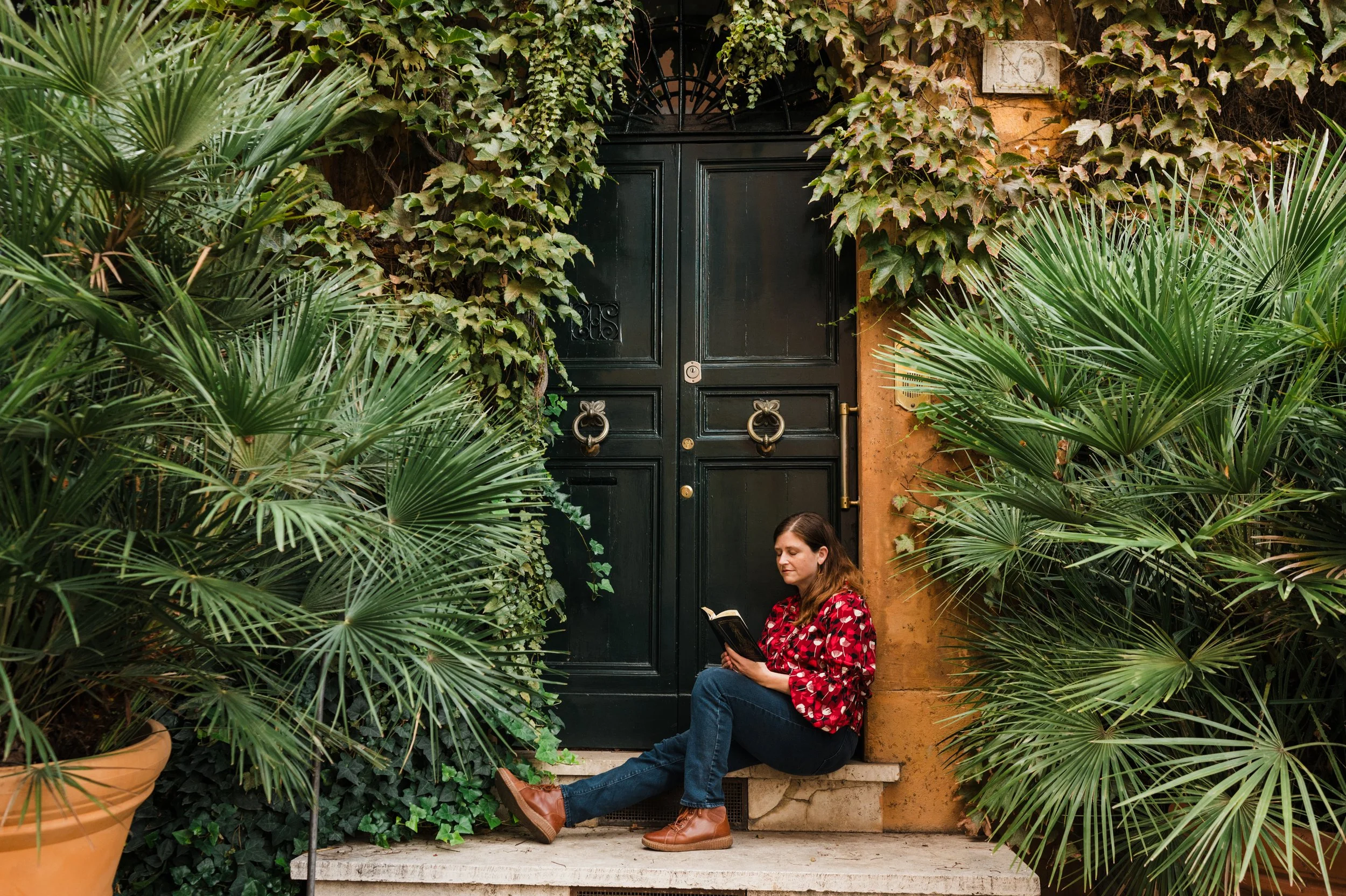
Caitlin Bootsma is working to fill a gap in Catholic publishing by writing unique stories for middle-grade readers. With extensive experience writing – and reading – Caitlin is uniquely positioned to strike the right tone with young readers, including the five she is raising! She uses her stories to share the beauty of the Catholic faith.
Tell us about your background. Have you always wanted to write?
Looking back, I think this is one of those cases where something seems obvious in hindsight but wasn’t at the time. I have always read more than anyone I know, since the time I was six. My mom used to put a strict 10-book limit on my library visits and used to say I “devoured” books. But beyond one brief stint getting a poem published in middle school, I didn’t think about writing until it became the part of my institutional communications career that I gravitated toward most.
What made you decide to write books for children and middle schoolers? What do you think of the current books available for those ages? Are there other books that expose young readers to the faith?
Catholic publishers seem to have recognized a gap and a need for books for middle grade readers, and so I have seen more good books come out recently. When I was first writing “Detective Thomas and the Biggest Question,” however, I hoped to make a series that was as engaging as, “Nate the Great” or “Nancy Drew,” but at its core, was a mystery that helped kids recognize the reasonableness (and great beauty) of the Catholic faith.
What inspired your Detective Thomas?
My oldest son! When he was only 6 or 7, he asked us at the dinner table how we could know that God exists. My husband and I both have a solid background in theology, and we realized we were explaining Aquinas’ five proofs for the existence of God - but in a way a kid would understand them. And he did! I love fiction and believe in the power of a good story, and somehow, Detective Thomas was born, and he gets some help from St. Thomas Aquinas in the first book. In the second book (out tomorrow!), the help is from a different saint.
What do you hope young readers take away from “How Edith Found Jesus?”
“How Edith Found Jesus” was my second book and one that actually came from a different project. I thought I was writing a Young Adult book on one of my favorite saints, but after a lot of research and three chapters of writing, I suddenly had an idea for a picture book. I find there’s a lot of truth to the creative process not being linear! My biggest hope for readers with this book is that they see not only how God was seeking out Edith, but how he is also seeking out a relationship with each one of us.
What inspired you most about the saints? Who else would you like to write about?
I love that we have such a diverse, rich group of saints to write about. I currently have some ideas spinning in my head about Servant of God Adele Brice, the seer of Our Lady of Champion, so we’ll see where that ends up. I have a manuscript out for consideration about Gianna Molla. And, I do have a saint in mind for a third Detective Thomas, should the publishers want it.
Why do you think it’s important to share the hard parts of the saints' stories (such as Edith’s death in Auschwitz)? How can we all work to meet our children where they are and still provide challenges that make them think more deeply?
Suffering - and redemption - is such an integral part of our Christian story. While we want to be developmentally appropriate with details that we share, I think it's important for kids to see that God is with us through suffering and that He suffered and died for us. In “How Edith Found Jesus,” the illustrator did a great job with a few pages where Edith is suffering (brown tones) and then when she enters heaven (full color). This artistic choice was something that many kid readers commented on and intuitively understood.
What is your writing process and how does your faith influence it?
Much of my career has been in institutional communications and in marketing, so it's been interesting for me to observe how the creative writing process is different. I like to read a lot about a subject if the writing project is at all historical. I often start a document or just a piece of paper and write down ideas. Often, the beginning stages take time because I’m waiting for the right angle to strike me. Once I recognize something like having the St. Edith book center around a game of hide and seek, writing comes a lot more naturally. I usually fluctuate between writing scenes and fleshing out an outline of the plot. Lots of drafting and not being afraid to rewrite, and then asking people (including my kids) to edit drafts before they even make it to an acquisitions editor.
What was the publishing process like for you? What advice would you give others who have book ideas?
Honestly, some of it is just perseverance. For my first book, I diligently put together what I thought was a great proposal and got rejected a couple of times. Our Sunday Visitor took the book on, and I think one significant aspect of the process is that your book has to be the kind of book they are looking for at the time. It could be a great book, but if they aren’t looking for that genre or subject matter, they aren’t going to take it.
My biggest suggestions would be to:
Look at publishers’ other titles, so you have a sense of how your book might fit into their offerings
Don’t let rejections get to you, and listen if a publishing house has any feedback
Regardless of what kind of book you write, if you’re Catholic, I highly recommend the Catholic Writer’s Guild as a group where you can learn more about the publishing process, learn more about writing, and can even beta-test some of your work.
Caitlin Bootsma grew up in the book worlds of Avonlea, the Shire and Narnia and couldn't be more delighted to write meaningful stories for kids. Alongside her work as an author, Caitlin is a journalist and editor for publications for adults. Her background in theology, history, and storytelling guides her writing, as do her best editors - her five kids! It is her hope that her books impart both reason and the mystery of the Catholic faith.
Sharon Bengel, Managing Editor at Catholic Women in Business, is a cradle Catholic with more than 30 years of experience in writing, communications and publication design. A recovering newspaper reporter with a crush on the prophet Jeremiah, Sharon loves discovering new things about the scriptures. She runs an LLC out of her home office in southwest Ohio where she keeps a stash of chocolate for her grandkids.